
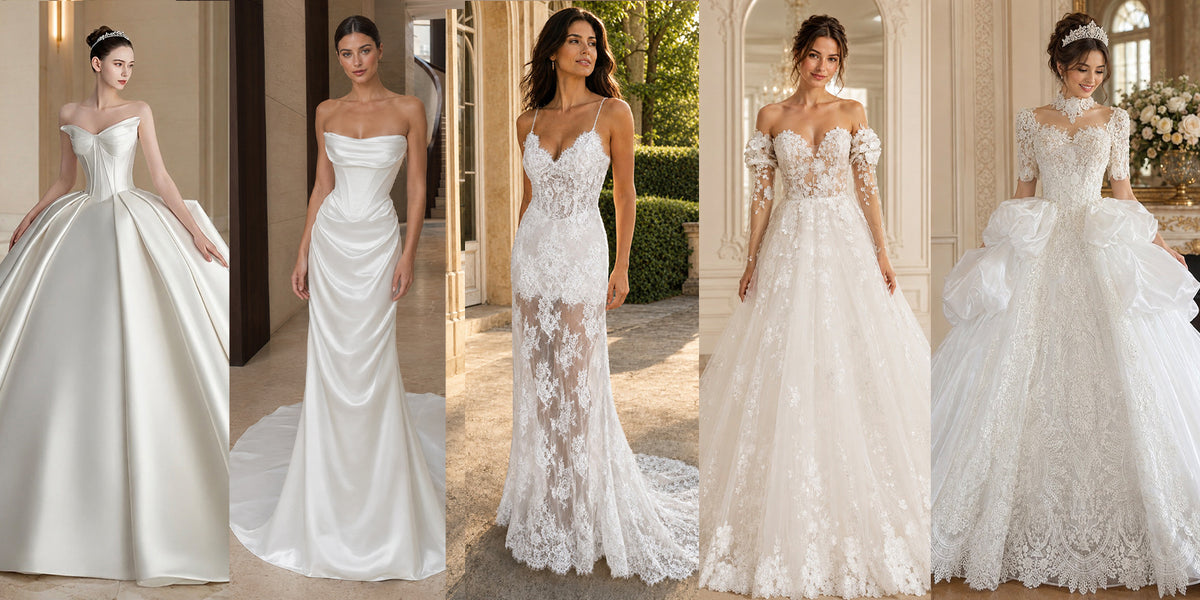
The Ultimate Bride’s Guide to Wedding Dress Fabrics & Materials
Choosing a wedding dress is about more than silhouette. Fabric determines how a gown drapes, moves, holds its shape, reflects light and feels against the body. From structured Mikado and Duchess satin to fluid satin, French-style corded lace, Guipure, embroidered and beaded lace, 3D floral lace, crepe, chiffon, organza and tulle, each bridal material creates a distinctly different look and feel.
This Bella Luna Gowns guide pairs real wedding gowns with close-up fabric examples to help you understand the differences in texture, structure, sheen, weight and movement—and why certain fabrics are better suited to particular bridal silhouettes and design details.
Wedding Dress Fabrics at a Glance
Start with the look and movement you want. Bridal fabrics can be broadly understood by how structured, fluid, textured or airy they feel on the finished gown.
STRUCTURED & SCULPTURAL — Mikado • Duchess Satin
Crisp, substantial bridal fabrics that hold their shape beautifully. Ideal for ball gowns, structured A-lines, basque waists, pleating, bows and architectural silhouettes where definition and volume are important.
SMOOTH & FLUID — Soft Satin • Chiffon
Fabrics that follow the body with a softer drape. Fluid satin creates luminous movement and elegant folds, while crepe offers a smoother, more matte appearance often favored for sleek fitted and minimalist silhouettes.
TEXTURED & ORNATEFrench — Style Lace • Guipure • Embroidered • Beaded • 3D Floral
Lace and embellished bridal textiles create pattern, dimension, texture and visual depth. They can range from delicate and romantic to heavily corded, beaded or three-dimensional couture treatments.
LIGHT & AIRY — Tulle • Organza • Chiffon
Lightweight fabrics used to create softness, movement and volume. Tulle can build ethereal layers, organza adds crisp volume with little visual heaviness, and chiffon creates the softest, most fluid movement of the three.
Fabric, Fiber & Finish: Why Bridal Fabric Names Can Be Confusing
Wedding dress fabric terminology can be confusing because the words used to describe bridal materials do not always refer to the same thing. Some terms describe how a textile is constructed, some describe the fiber it is made from, and others describe decorative treatments added afterward.
Satin, for example, describes a smooth, lustrous fabric construction rather than one specific fiber. Bridal satin may be made in different weights and compositions, which is why a substantial Duchess satin behaves very differently from a soft, fluid satin used for a draped or fitted gown.
Mikado is a more structured bridal textile known for its substantial body and refined finish. Different Mikados can vary in weight, softness, sheen, fiber content and even stretch, so not every Mikado gown will feel or move exactly the same way.
Lace terminology can become even more layered. French-style corded lace, Guipure, embroidered lace and Chantilly describe different lace constructions or visual characteristics, while terms such as beaded, sequined, pearl-embellished and 3D floral may describe treatments added to the underlying lace or tulle.
For example, a gown may begin with an embroidered lace and then be embellished with sequins and pearls, or individual lace appliqués may be placed over tulle and finished with dimensional flowers. Understanding these layers makes it easier to see why two gowns described simply as “lace wedding dresses” can look, feel and cost very differently.
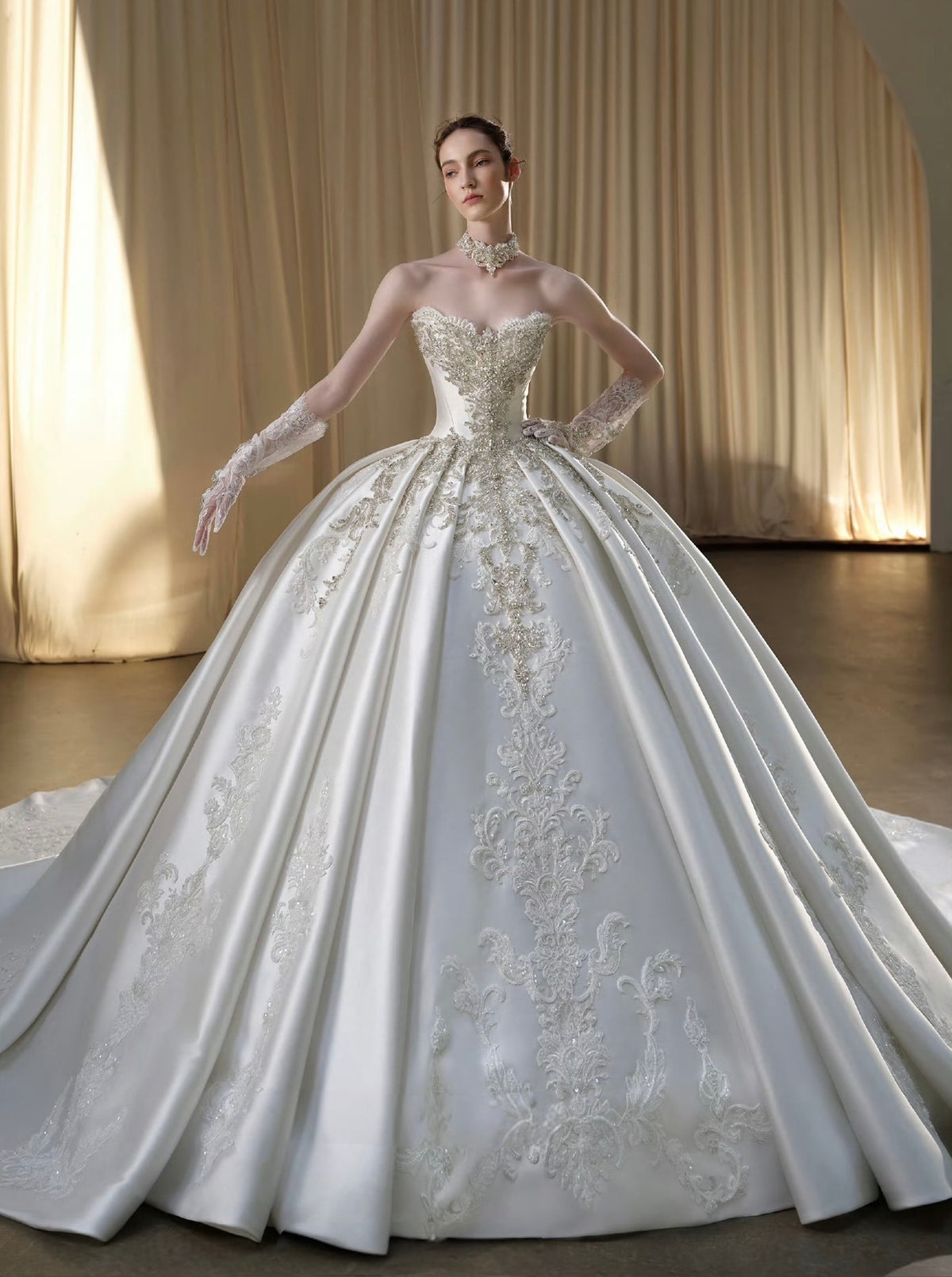
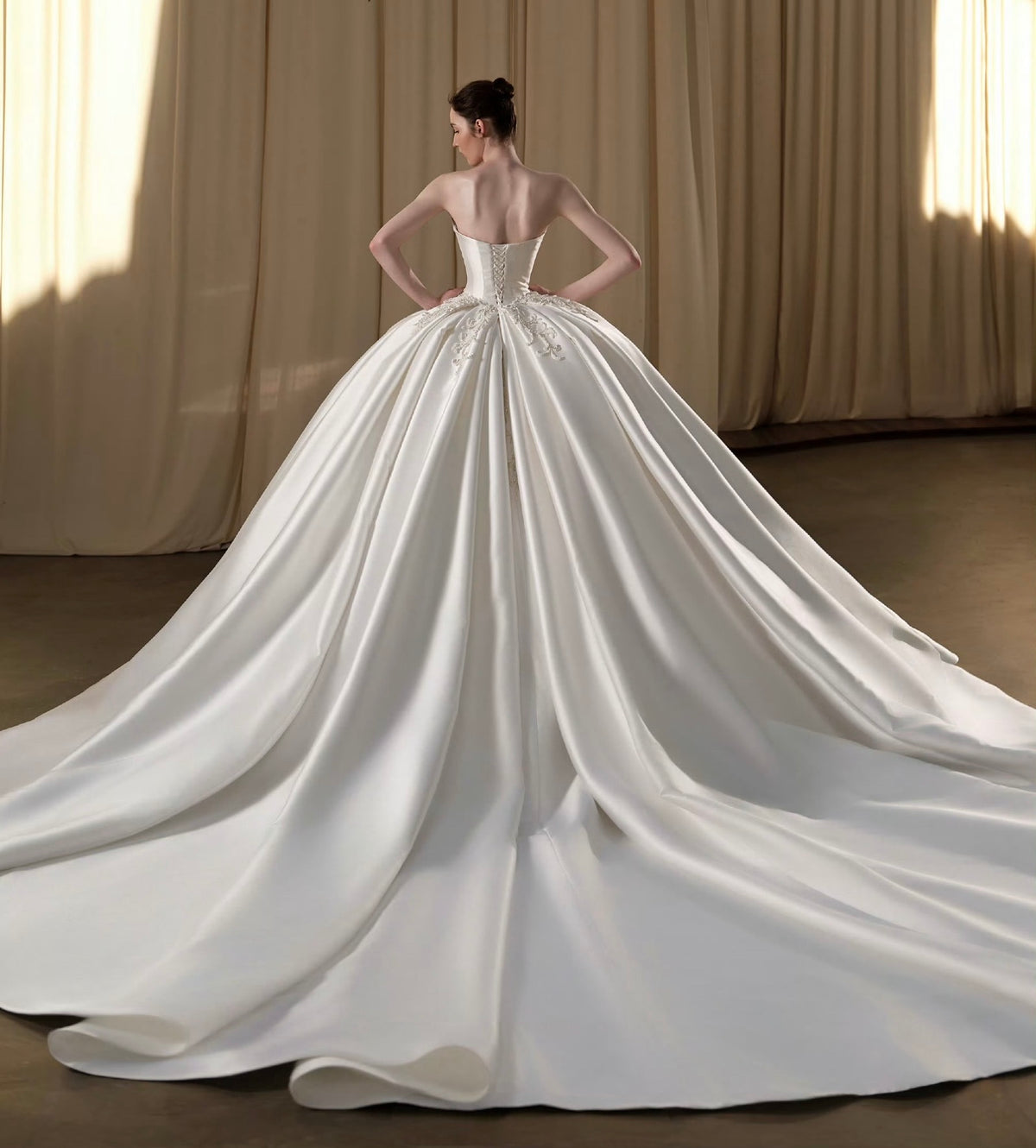
Duchess Satin Wedding Dresses
Duchess satin is a substantial, luxurious satin known for its smooth surface, refined sheen and ability to hold a beautifully structured shape. Compared with softer satins, it has greater body and support, which allows pleats, corseted bodices, full skirts and dramatic trains to remain crisp and defined.
What Does Duchess Satin Look & Feel Like?
Duchess satin typically feels smooth, dense and polished, with a richer hand than lightweight satin. Its sheen is elegant rather than overly glossy, giving the fabric a formal, couture appearance while still reflecting light beautifully in photographs.
Best Wedding Dress Silhouettes for Duchess Satin
Duchess satin is especially well suited to ball gowns, structured A-lines, corseted wedding dresses, basque waists, pleated skirts and dramatic cathedral trains. Its weight and body make it ideal when the design depends on clean lines, sculpted volume or architectural structure.
What Brides Should Know
Because Duchess satin has a smooth, uninterrupted surface, seams, pleating and construction details are highly visible, so precise tailoring matters. It is generally heavier and more structured than fluid satin, making it a wonderful choice for brides who want a polished, formal silhouette rather than a soft, body-skimming drape.
At Bella Luna, we select heavier bridal satins such as Duchess satin when a custom design needs structure, volume and a luxurious smooth finish without relying on lace or heavy embellishment.
- Weight: Medium-Heavy to Heavy
- Structure: High
- Drape: Full, Controlled and Sculptural
- Sheen: Refined to luminous
- Best For: Ball gowns, structured A-lines, corseted silhouettes, defined waistlines, pleated skirts and dramatic trains.
- Movement: Controlled and sculptural
- Why designers use it: Creates volume and definition while maintaining a smooth, luxurious surface

Soft & Fluid Satin Wedding Dresses
Soft satin is a smooth, fluid wedding dress fabric prized for its graceful drape, luminous surface and elegant movement. Unlike heavier Duchess satin, softer bridal satins follow the body more naturally, creating flowing folds and a less structured silhouette. Different soft satins vary in weight, sheen and flexibility, so the exact fabric should be chosen according to the design of the gown.
What Does Soft Satin Look & Feel Like?
Soft satin typically feels smooth, supple and silky to the touch, with a fluid drape that moves beautifully as the bride walks. Its reflective surface catches light naturally, creating anything from a subtle glow to a more luminous finish depending on the satin and lighting.
Best Wedding Dress Silhouettes for Soft Satin
Fluid satin is especially beautiful for fitted wedding dresses, sheath gowns, soft mermaid and fit-and-flare silhouettes, cowl necklines, draped bodices and minimalist bridal gowns. It works particularly well when the design relies on movement, gathering or soft folds rather than architectural volume.
What Brides Should Know
Because softer satin has a smooth surface with little texture to disguise what lies beneath it, lighter satins may reveal body contours, seams or undergarment lines more readily than lace or heavier structured fabrics. Fabric weight, lining, corsetry and strategic draping all influence how smoothly the finished gown falls.
Soft satin may also show creasing more readily than some structured bridal fabrics, especially after sitting or during travel, although this varies considerably by fabric composition and weight.
At Bella Luna, we choose the specific satin weight and construction according to the gown itself. A softly draped fitted wedding dress requires a very different satin from the substantial fabric used to create a sculpted ball gown.
- Weight: Light to Medium
- Structure: Low to Medium
- Drape: Soft and Fluid
- Sheen: Refined to Luminous
- Best For: Fitted, sheath, soft mermaid, fit-and-flare, cowl-neck and draped wedding dresses
- Movement: Flowing and body-skimming
- Why designers use it: Creates elegant movement, soft draping and a clean, luxurious bridal finish
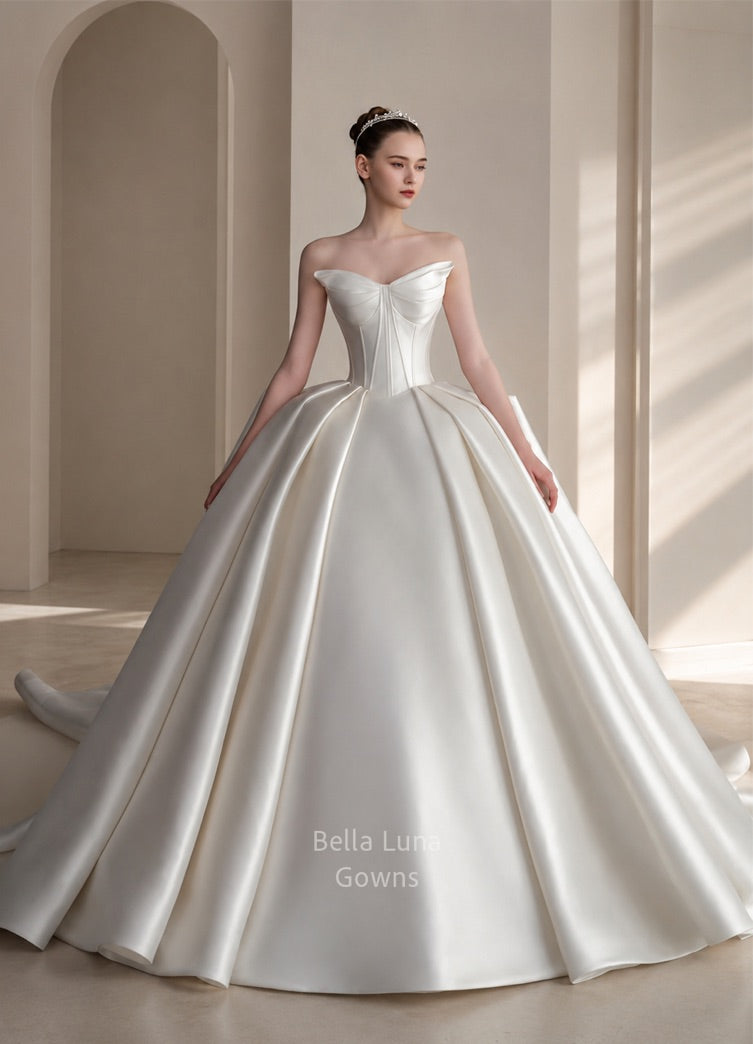
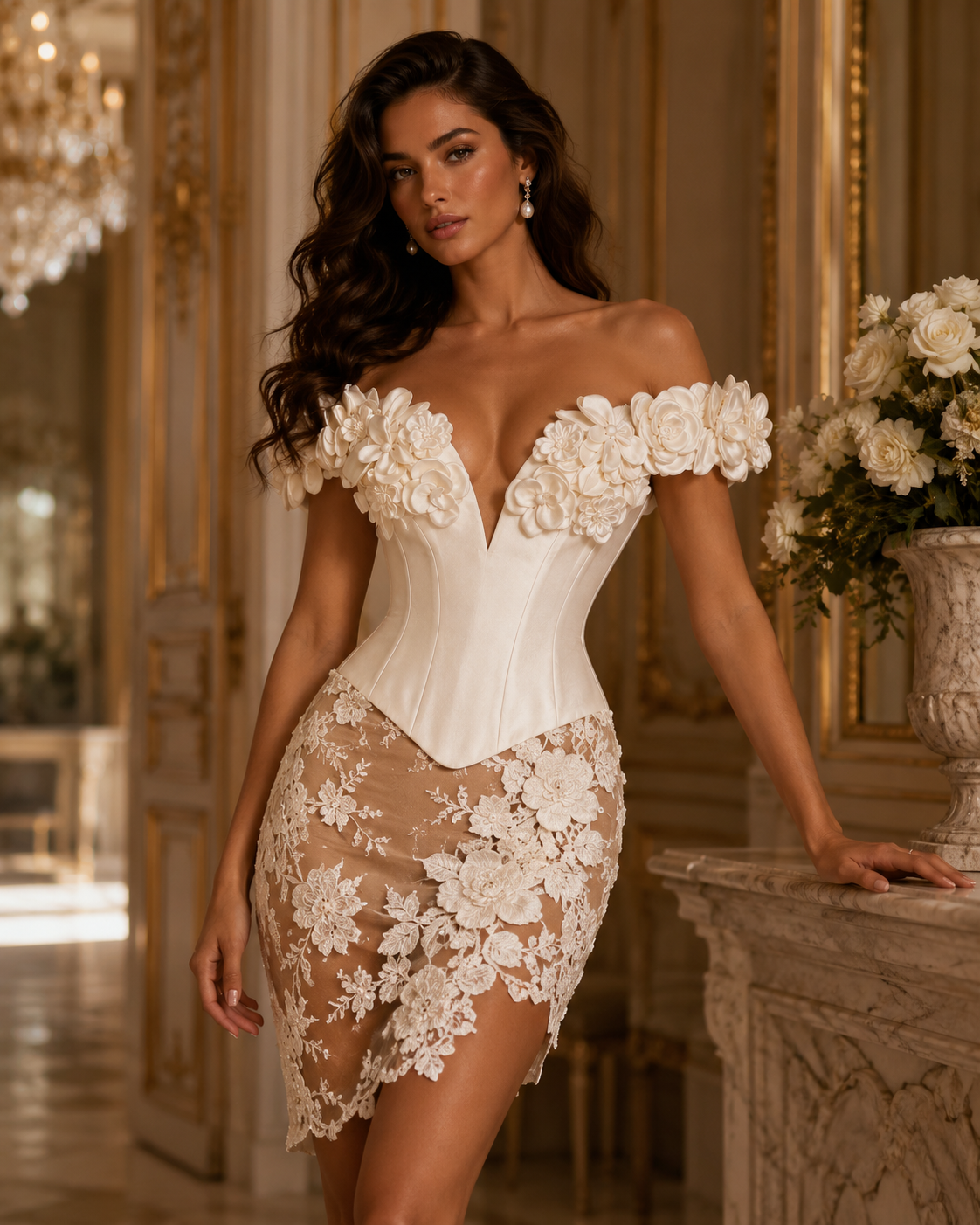
Mikado Wedding Dresses
Mikado is a structured wedding dress fabric known for its smooth, substantial feel, crisp shape and refined low-to-medium sheen. It has enough body to create clean architectural lines and dramatic volume, making it a favorite for modern ball gowns, structured A-lines and minimalist bridal designs.
What Does Mikado Look & Feel Like?
Mikado typically feels firm, smooth and slightly crisp, with more body than fluid satin. Its surface may have a subtle texture or grain rather than the very glossy finish associated with some satins, giving Mikado wedding dresses a polished, sophisticated appearance.
Different Mikados can vary considerably in weight, softness, sheen, fiber content and flexibility, so one Mikado gown may feel noticeably different from another.
Best Wedding Dress Silhouettes for Mikado
Mikado is especially well suited to ball gowns, structured A-lines, basque and drop waists, corseted wedding dresses, pleated skirts, statement bows and detachable overskirts. It works beautifully when a bridal design depends on strong proportions, clean seams and sculptural volume.
What Brides Should Know
Because Mikado is relatively structured, it generally holds its silhouette rather than falling close to the body like soft satin. This can create a smooth, polished appearance and help emphasize architectural design details.
Its substantial construction can also make Mikado feel warmer or heavier than very lightweight bridal fabrics, so the exact weight of the fabric and gown construction should be considered for warm-weather or outdoor weddings.
At Bella Luna, Mikado is selected when a bridal design needs clean structure, defined volume and a refined couture finish—particularly for dramatic skirts, corsetry, bows and convertible bridal elements.
- Weight: Medium to Heavy
- Structure: High
- Drape: Crisp and Sculptural
- Sheen: Low to Medium / Refined
- Best For: Ball gowns, structured A-lines, basque waists, corseted gowns, pleated skirts, bows and overskirts
- Movement: Controlled with strong shape retention
- Why designers use it: Creates clean architectural lines and dramatic volume without relying on heavy embellishment
Duchess Satin vs. Soft Satin vs. Mikado: What’s the Difference?
Duchess satin, soft satin and Mikado can all create smooth, elegant wedding dresses, but they behave very differently. The right choice depends less on which fabric is “best” and more on whether the gown needs sculptural structure, fluid movement or crisp architectural definition.
DUCHESS SATIN
Best for luxurious structure
Smooth, substantial and polished with a refined satin sheen. Duchess satin holds full skirts, pleating, corsetry and dramatic trains beautifully while maintaining a rich, formal appearance.
Choose it if you want:
A classic, luxurious and structured bridal look.
Structure: High
Movement: Controlled
Sheen: Refined to luminous
SOFT SATIN
Best for fluid movement
Supple, smooth and body-skimming. Softer bridal satin creates draping, gathered folds and graceful movement rather than rigid volume.
Choose it if you want:
A sleek, sensual or minimalist wedding dress with a softer silhouette.
Structure: Low–Medium
Movement: Fluid
Sheen: Refined to luminous
MIKADO
Best for architectural shape
Crisp and substantial with a more restrained, sophisticated surface than many satins. Mikado excels at clean seams, structured corsetry, dramatic skirts, bows and sculptural bridal details.
Choose it if you want:
A modern, polished wedding gown with strong shape and definition.
Structure: High
Movement: Controlled
Sheen: Low–Medium / Refined
Wedding Dress Lace: Understanding the Different Types
Lace wedding dresses can look dramatically different depending on how the lace is constructed, the scale and density of its pattern, the fabric underneath it and any embellishment added afterward. Some bridal laces are delicate and airy, while others are bold, dimensional or heavily textured.
Terms such as French-style corded lace, Guipure lace and Chantilly lace describe different lace constructions or characteristics. Embroidered lace, lace appliqué, beaded lace and 3D floral lace describe additional ways pattern, texture and embellishment may be created or applied to a wedding gown.
The lining beneath the lace also changes the final appearance. Lace placed over nude or illusion tulle creates stronger contrast and allows the pattern to stand out, while an ivory or opaque lining produces a softer, more traditional bridal effect.
At Bella Luna Gowns, lace is selected according to the overall design—including the silhouette, desired coverage, corsetry, train, level of texture and amount of embellishment—rather than choosing a lace type in isolation.
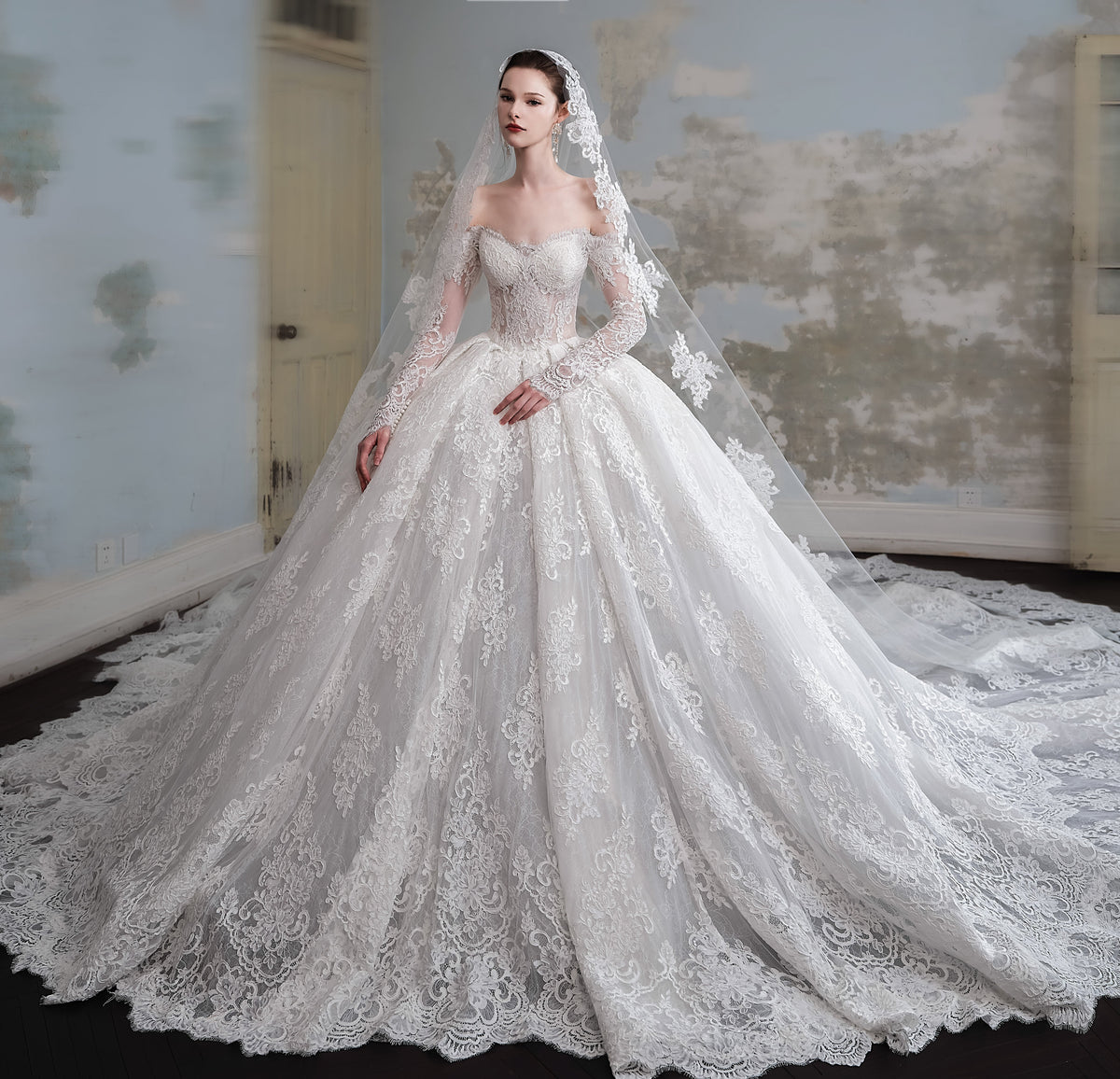
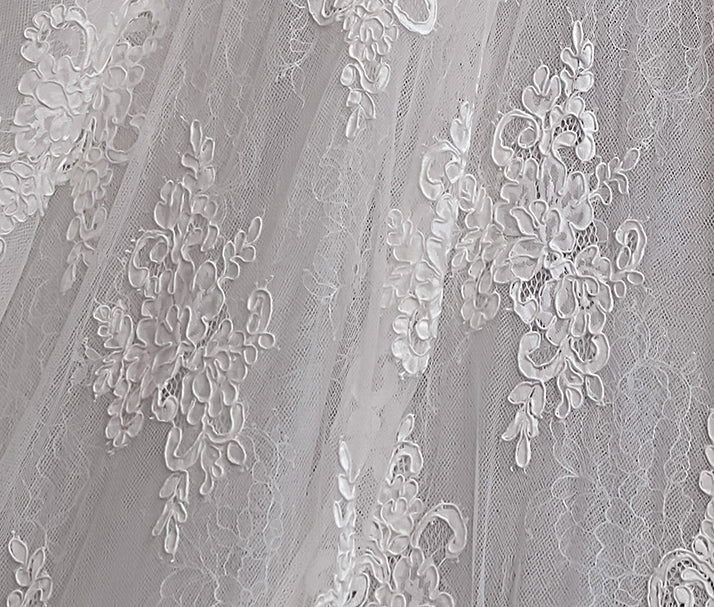
French-Style Corded Lace Wedding Dresses
French-style corded lace is a premium bridal lace characterized by floral or ornamental motifs outlined with raised threads, creating greater definition, texture and dimension. The cording gives the pattern a rich, sculpted appearance that stands out beautifully across corseted bodices, sleeves, skirts and dramatic wedding dress trains.
What Does French-Style Corded Lace Look & Feel Like?
Corded lace has a more substantial, dimensional surface than fine non-corded lace. The raised outlines emphasize individual flowers, leaves and decorative motifs, allowing the lace pattern to remain clearly visible from both near and far.
Its texture can range from refined and delicate to bold and highly dimensional depending on the size of the motifs and thickness of the cording.
Best Wedding Dress Silhouettes for Corded Lace
French-style corded lace works beautifully on lace ball gowns, fitted and mermaid wedding dresses, corseted bridal gowns, long-sleeve wedding dresses and cathedral trains. Its defined pattern is particularly effective when lace itself is intended to be one of the main visual features of the gown.
What Brides Should Know
Corded lace is generally more substantial and more costly than many flatter bridal laces because of its dimensional construction and richly defined pattern. It can be used without embellishment for a sophisticated lace-focused look or further enhanced with pearls, crystals, sequins or hand-applied beadwork.
At Bella Luna, we frequently select premium bridal-grade French-style corded lace when a design calls for rich texture, visible lace definition and an elevated couture finish.
- Weight: Light-Medium to Medium
- Structure: Medium
- Texture: Raised and Dimensional
- Pattern Definition: High
- Best For: Ball gowns, fitted gowns, corsetry, sleeves and dramatic lace trains
- Movement: Depends on the lace ground and gown construction
- Why designers use it: Creates rich visual depth and makes intricate lace motifs stand out beautifully
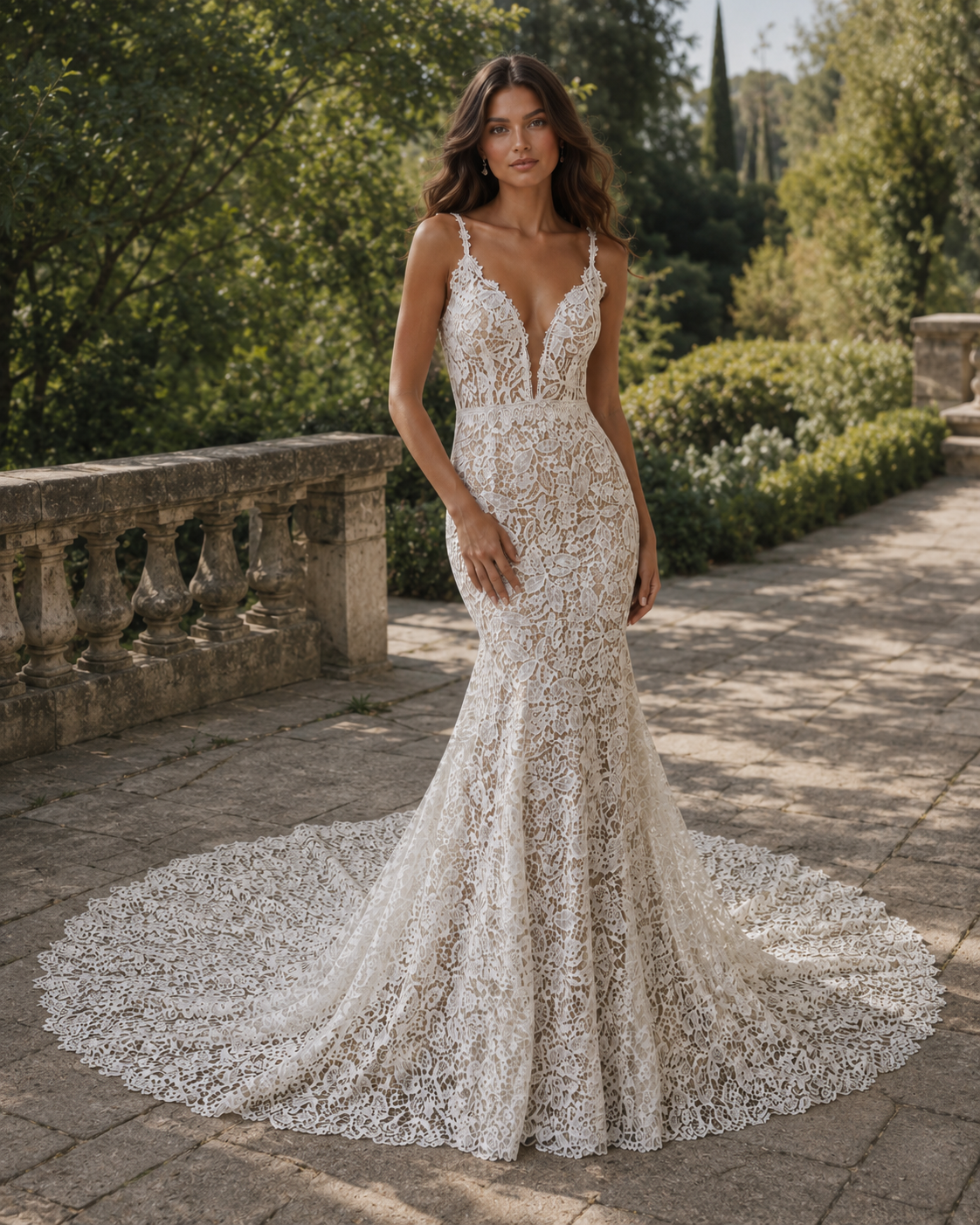
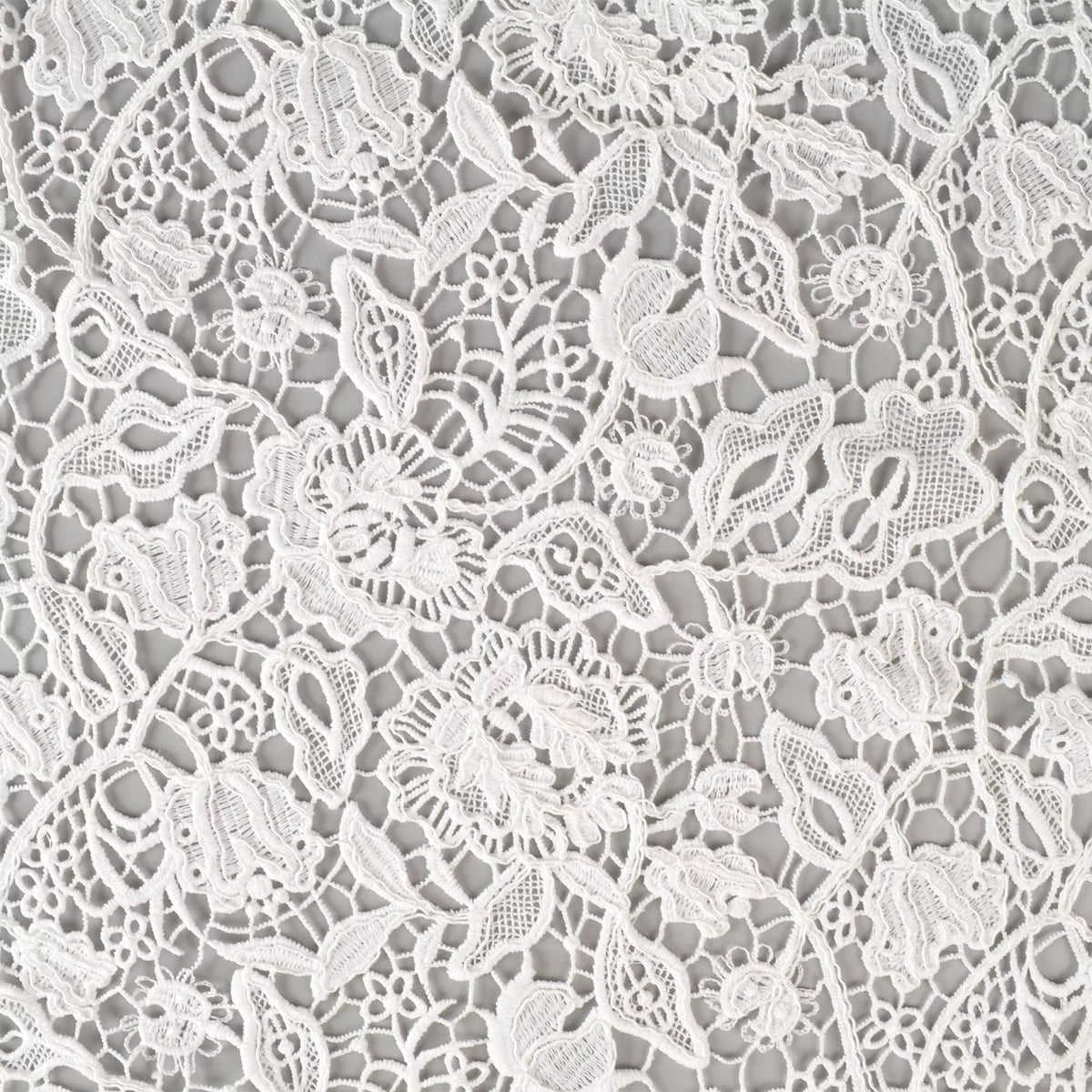
Guipure Lace Wedding Dresses
Guipure lace is a distinctive bridal lace made from connected floral or ornamental motifs without the fine net background seen in many traditional laces. Instead, the motifs are joined by small bars or braided threads, creating a more substantial, graphic and highly textured appearance.
What Does Guipure Lace Look & Feel Like?
Guipure typically looks bolder and more defined than delicate net-based lace. Because there is little or no sheer mesh filling the spaces between motifs, the pattern can appear almost sculptural, with visible openwork between the flowers, leaves or geometric elements.
It generally has more body than very fine bridal lace and can range from moderately soft to quite structured depending on the design.
Best Wedding Dress Silhouettes for Guipure Lace
Guipure works beautifully for fitted wedding dresses, structured A-lines, corseted bodices, sleeves, bridal separates and lace overlays. Larger-scale Guipure patterns are especially striking on clean silhouettes where the lace itself becomes the main design feature.
What Brides Should Know
Because Guipure has open spaces between its connected motifs, the lining underneath has a major effect on the final look. Nude or illusion lining creates stronger contrast and emphasizes the lace pattern, while ivory lining produces a softer, more traditional appearance.
Guipure can also feel more substantial than delicate net-based lace, so the scale and density of the pattern should be chosen according to the gown's silhouette and desired movement.
At Bella Luna, we use Guipure when a design calls for bold lace definition, visible texture and a more architectural lace effect rather than an extremely soft or delicate appearance.
- Weight: Medium to Medium-Heavy
- Structure: Medium to High
- Texture: Pronounced and Textural
- Pattern Definition: High
- Best For: Fitted gowns, A-lines, corsetry, sleeves, overlays and bridal separates
- Movement: More controlled than delicate net lace
- Why designers use it: Creates bold, highly visible lace motifs with strong texture and definition
How is Guipure different from corded lace? Guipure is defined primarily by its connected motifs and lack of a fine net ground, while corded lace is identified by raised threads outlining portions of the lace pattern.
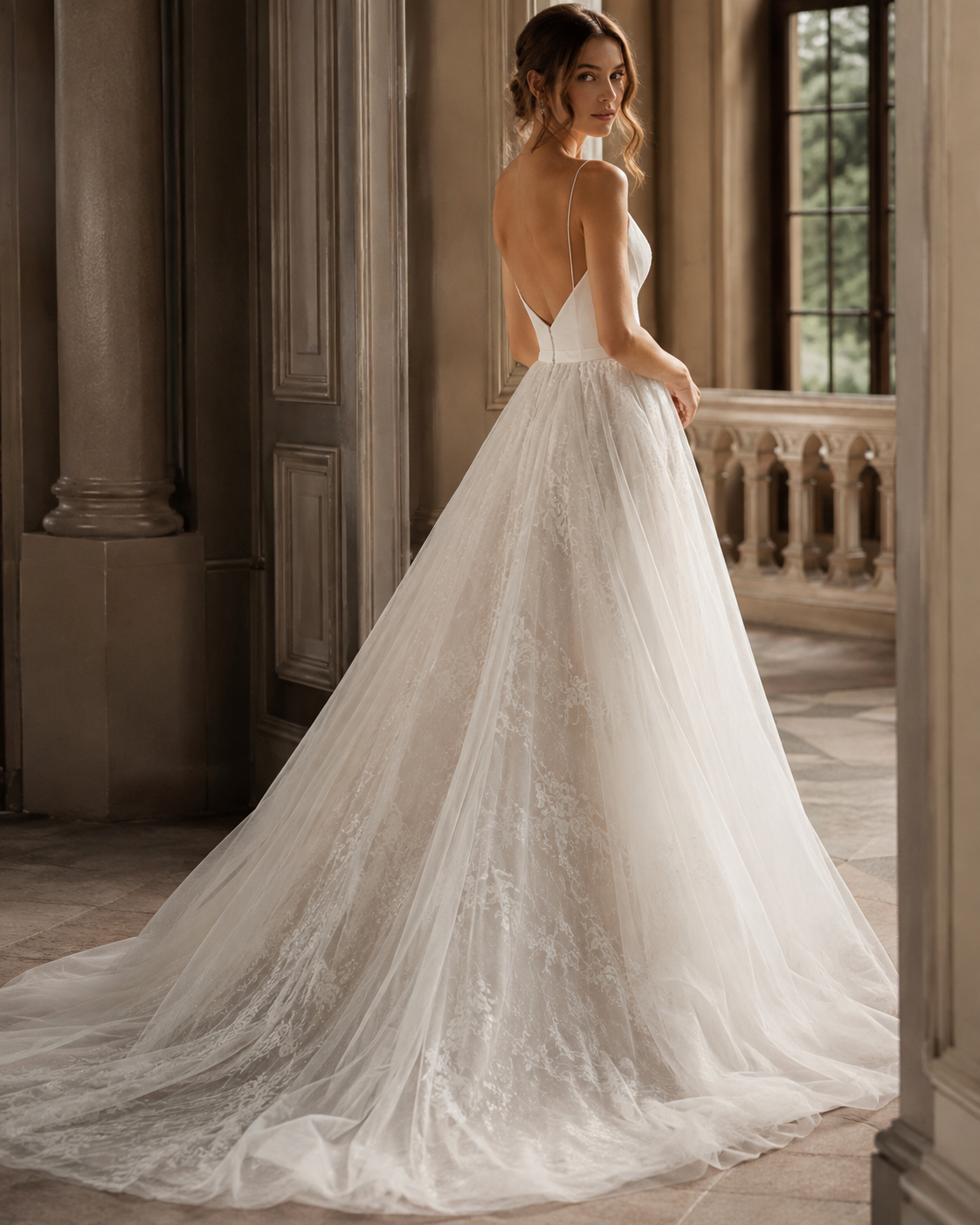
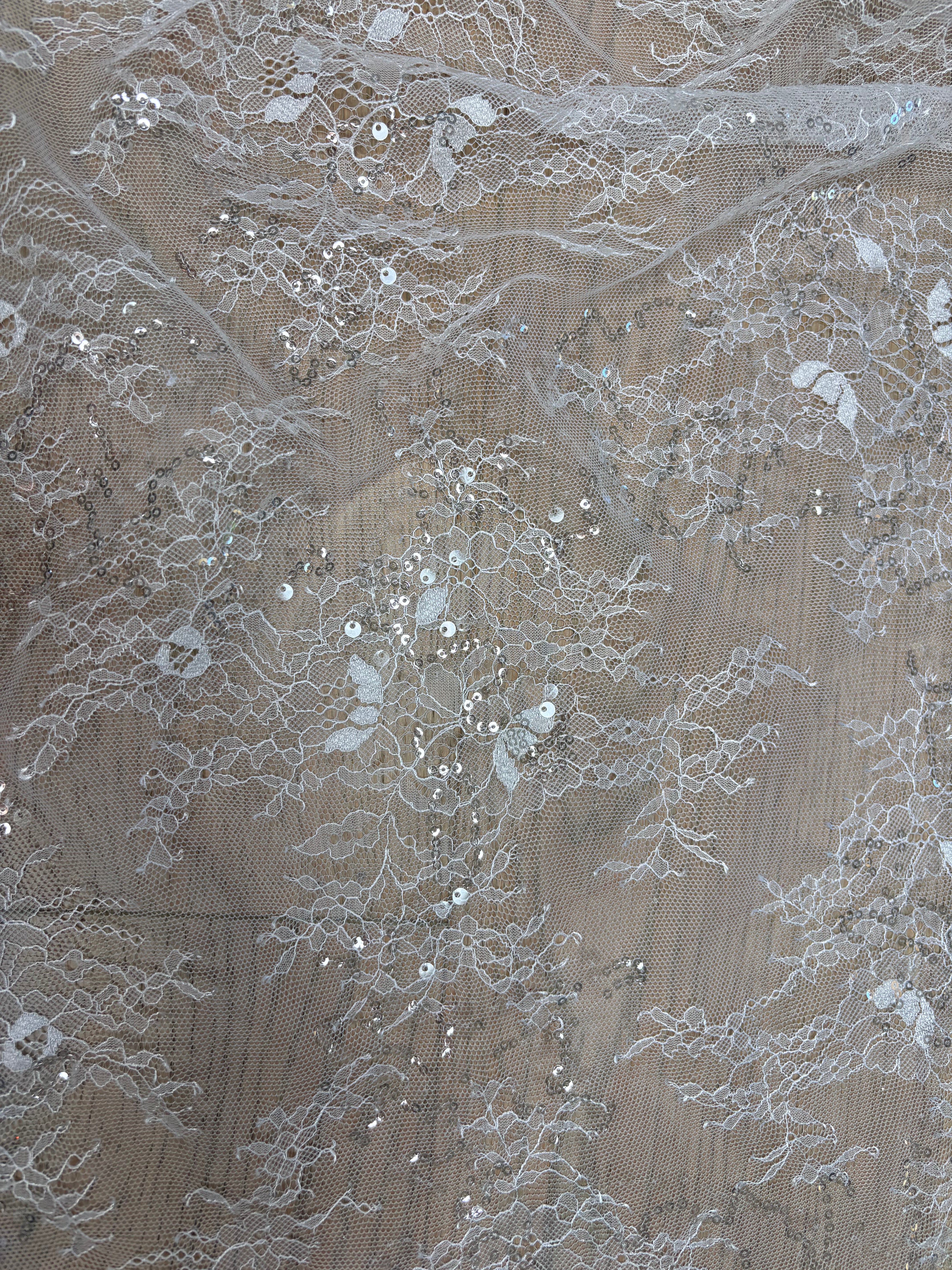
Chantilly Lace Wedding Dresses
Chantilly lace is a delicate, lightweight lace with origins in France and is one of the best-known traditional French lace styles used in bridal fashion. It is recognized for its fine net ground, intricate floral motifs and soft, almost weightless appearance. Compared with the stronger definition of corded lace or the open construction of Guipure, Chantilly creates a more subtle, romantic and ethereal effect.
What Does Chantilly Lace Look & Feel Like?
Chantilly lace typically feels soft, fine and flexible, with delicate floral or ornamental motifs worked into a sheer mesh ground. Its pattern is generally flatter and less raised than corded lace, allowing the fabric to drape softly and move naturally.
Traditional Chantilly may also feature scalloped or eyelash-style edges, although not every modern Chantilly-style bridal lace uses this finish.
Best Wedding Dress Silhouettes for Chantilly Lace
Chantilly lace works beautifully for soft A-line wedding dresses, fitted gowns, sleeves, illusion necklines, veils and layered bridal designs. Its lightweight construction also makes it useful beneath appliqués or embroidery when additional lace texture is desired without adding significant bulk.
What Brides Should Know
Because Chantilly is delicate and relatively flat, its pattern may appear soft and subtle over ivory lining or much more defined over nude and illusion layers.
Modern Chantilly-style lace can be produced in many countries, so the term describes the traditional lace style and visual character and does not necessarily guarantee French manufacture.
At Bella Luna, delicate Chantilly-style lace may be used alone or as a supporting layer beneath appliqué, embroidery or other dimensional lace treatments to create softness and visual depth.
- Weight: Very Light to Light
- Structure: Low
- Texture: Fine and Delicate
- Pattern Definition: Soft to Moderate
- Best For: Veils, sleeves, illusion details, fitted gowns, soft A-lines and layered lace designs
- Movement: Soft and Fluid
- Why designers use it: Adds intricate romantic lace detail without significant weight or bulk
What is the difference between Chantilly and Guipure lace? Chantilly is a lightweight lace with delicate motifs worked over a fine net ground, while Guipure connects its motifs without a fine mesh background, creating a bolder and generally more substantial lace.
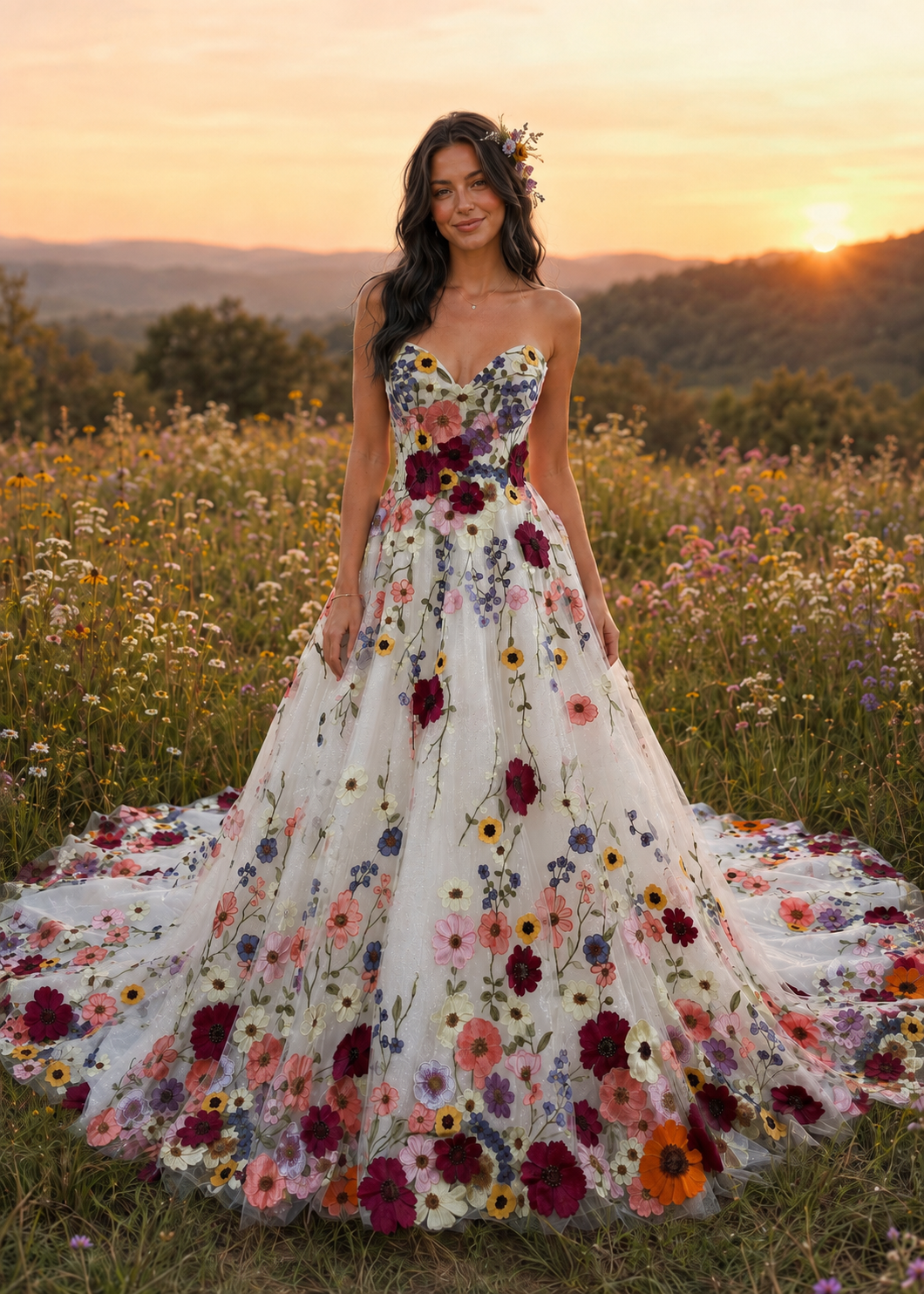
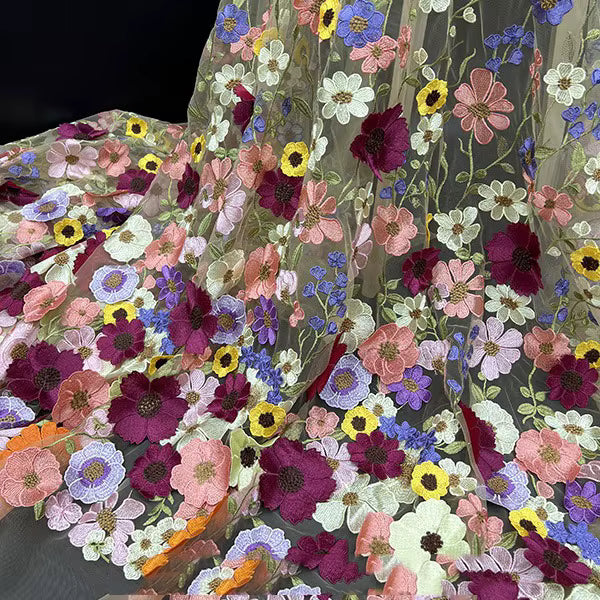
Embroidered Lace Wedding Dresses
Embroidered lace is a bridal fabric made by stitching floral, botanical or ornamental designs onto a sheer base such as tulle or mesh. The embroidery can be delicate and lightly scattered or dense and dramatic, creating anything from a soft romantic look to a bold couture effect.
What Does Embroidered Lace Look & Feel Like?
Embroidered lace has visible stitched motifs that sit on top of a sheer foundation, giving the fabric more definition and texture than plain tulle. The pattern may be fine and delicate or larger and more dimensional depending on the design.
Best Wedding Dress Silhouettes for Embroidered Lace
Embroidered lace works beautifully for A-line gowns, ball gowns, fitted and mermaid wedding dresses, corseted bodices, sleeves and dramatic trains. It is especially effective when the floral pattern is meant to be an important part of the overall design.
What Brides Should Know
The final look depends greatly on the color and lining beneath the lace. Nude or illusion lining creates more contrast and makes the embroidery stand out, while ivory or off-white lining creates a softer, more blended bridal effect.
Embroidered lace can also be enhanced with sequins, pearls, crystals or 3D floral details, or individual motifs can be cut from the fabric and repositioned as appliqués.
At Bella Luna, embroidered lace is used when a design calls for visible floral detail, texture and a more decorative bridal finish.
- Weight: Light to Medium
- Structure: Low to Medium
- Texture: Raised and Decorative
- Pattern Definition: Moderate to High
- Best For: A-lines, ball gowns, fitted gowns, corsetry, sleeves and trains
- Movement: Soft to Moderately Structured
- Why designers use it: Adds floral detail and texture while keeping the gown soft and visually layered
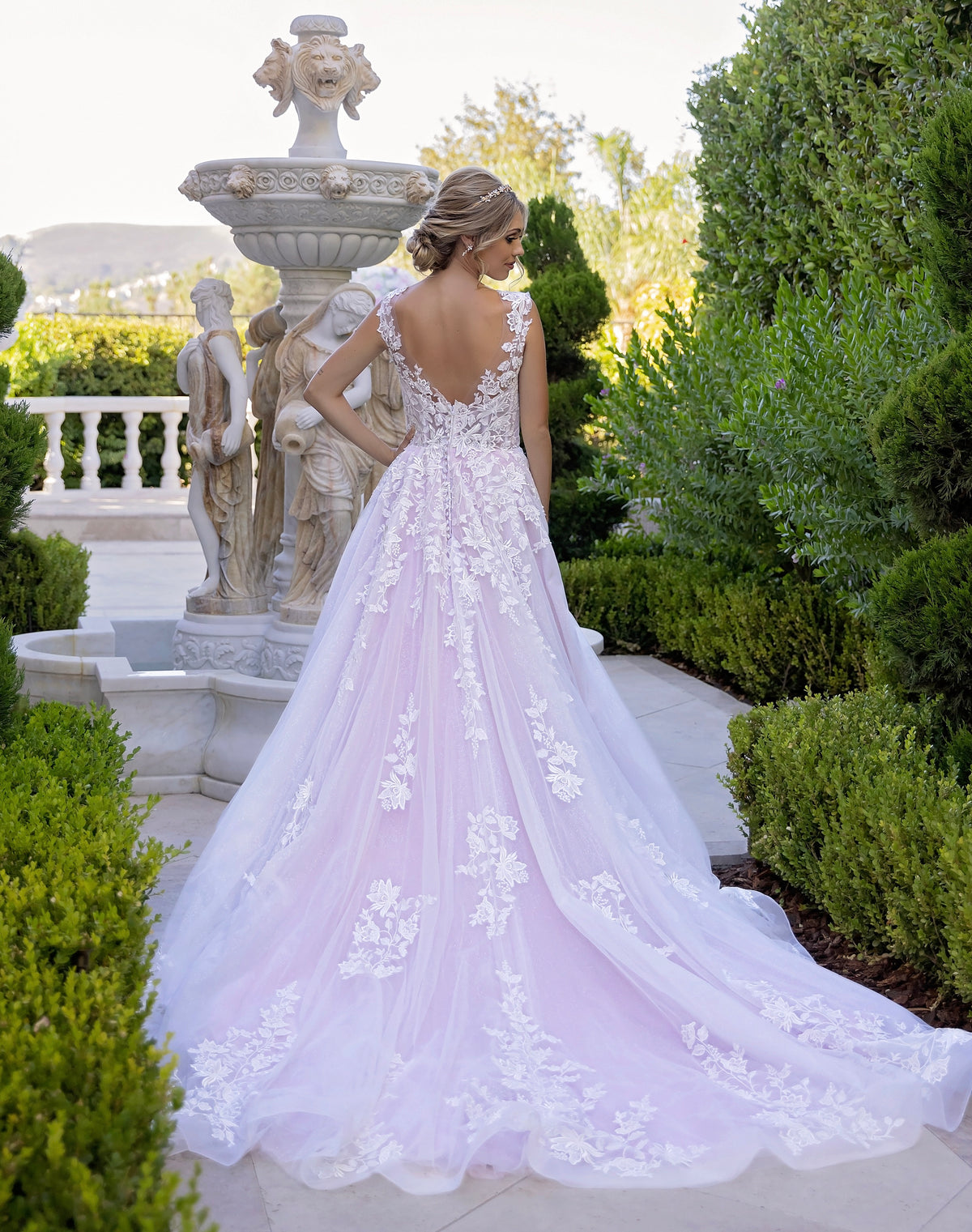
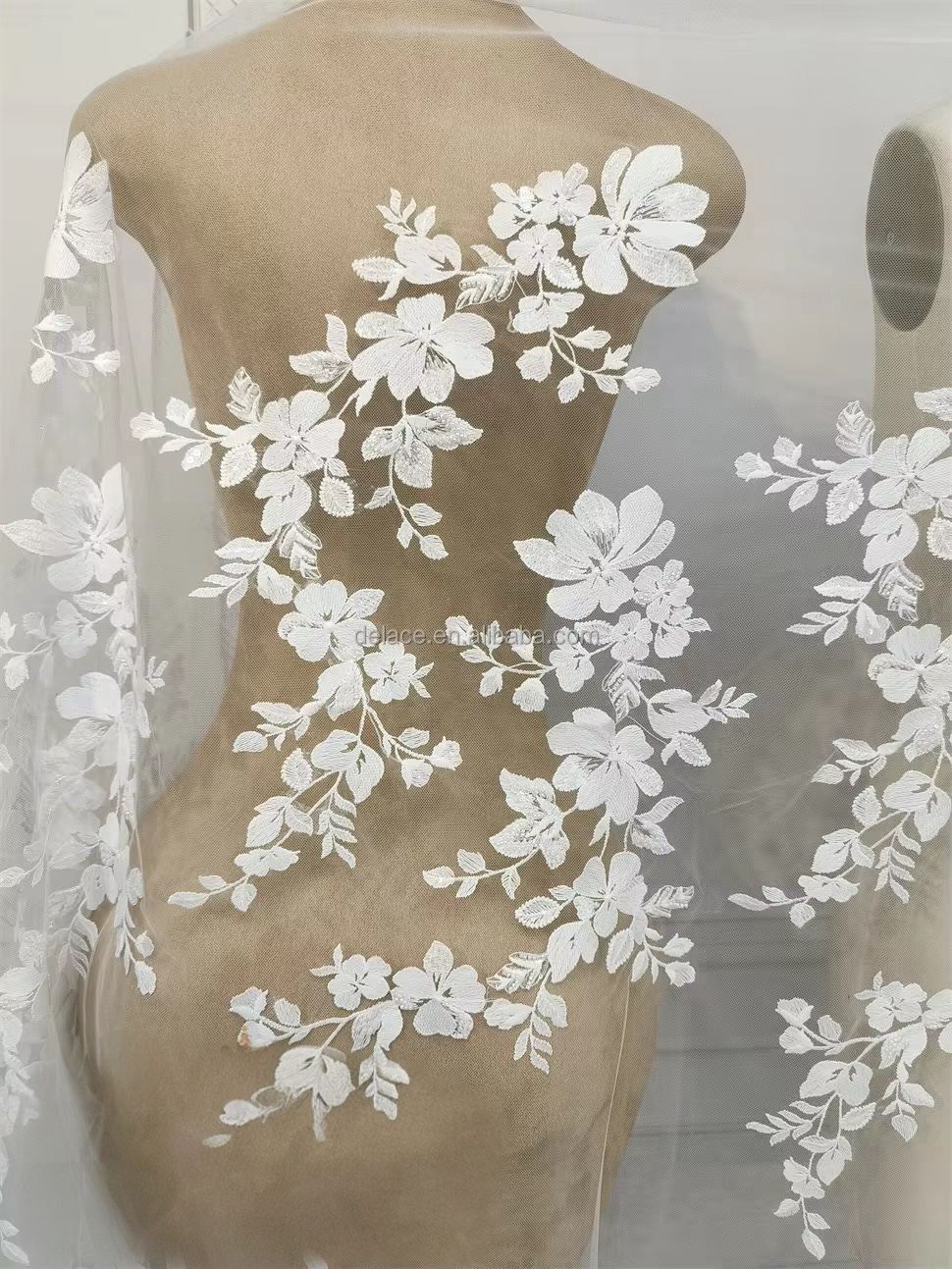
Lace Appliqué Wedding Dresses
Lace appliqué is created by cutting individual floral, botanical or ornamental motifs from lace or embroidered fabric and placing them separately onto another layer of the gown. The motifs can be arranged by hand across tulle, satin, corsetry or other bridal fabrics to create more controlled placement and a custom couture effect.
What Does Lace Appliqué Look & Feel Like?
Lace appliqués appear as individual motifs sitting on top of another fabric, rather than one continuous lace layer. The placement may be sparse and delicate or dense enough to create the appearance of an all-over lace gown.
Because the motifs are positioned separately, designers can control exactly where flowers, leaves or decorative elements appear on the bodice, sleeves, waist, skirt or train.
Best Wedding Dress Silhouettes for Lace Appliqué
Lace appliqué works beautifully for corseted wedding dresses, ball gowns, A-lines, fitted and mermaid gowns, illusion bodices, sleeves and dramatic trains. It is especially useful when the design calls for lace detail without covering the entire gown in one continuous lace fabric.
What Brides Should Know
Appliqué placement can dramatically change the final look of a gown. More concentrated motifs can create coverage, structure and visual emphasis, while scattered appliqués create a softer, more airy effect.
Appliqués may also be layered or embellished with pearls, sequins, crystals or dimensional flowers to create additional texture.
At Bella Luna, lace appliqués are often positioned individually to shape the bodice, highlight the waistline, frame a neckline or gradually extend floral detail into the skirt and train.
- Weight: Varies by appliqué and base fabric
- Structure: Varies
- Texture: Raised and Layered
- Pattern Definition: High
- Best For: Corsetry, illusion bodices, fitted gowns, ball gowns, sleeves and trains
- Movement: Depends primarily on the base fabric
- Why designers use it: Allows precise motif placement and creates a custom, dimensional lace effect
What is the difference between lace fabric and lace appliqué? Lace fabric is a continuous textile, while lace appliqués are individual motifs cut from lace or embroidered fabric and then placed separately onto another layer of the gown.
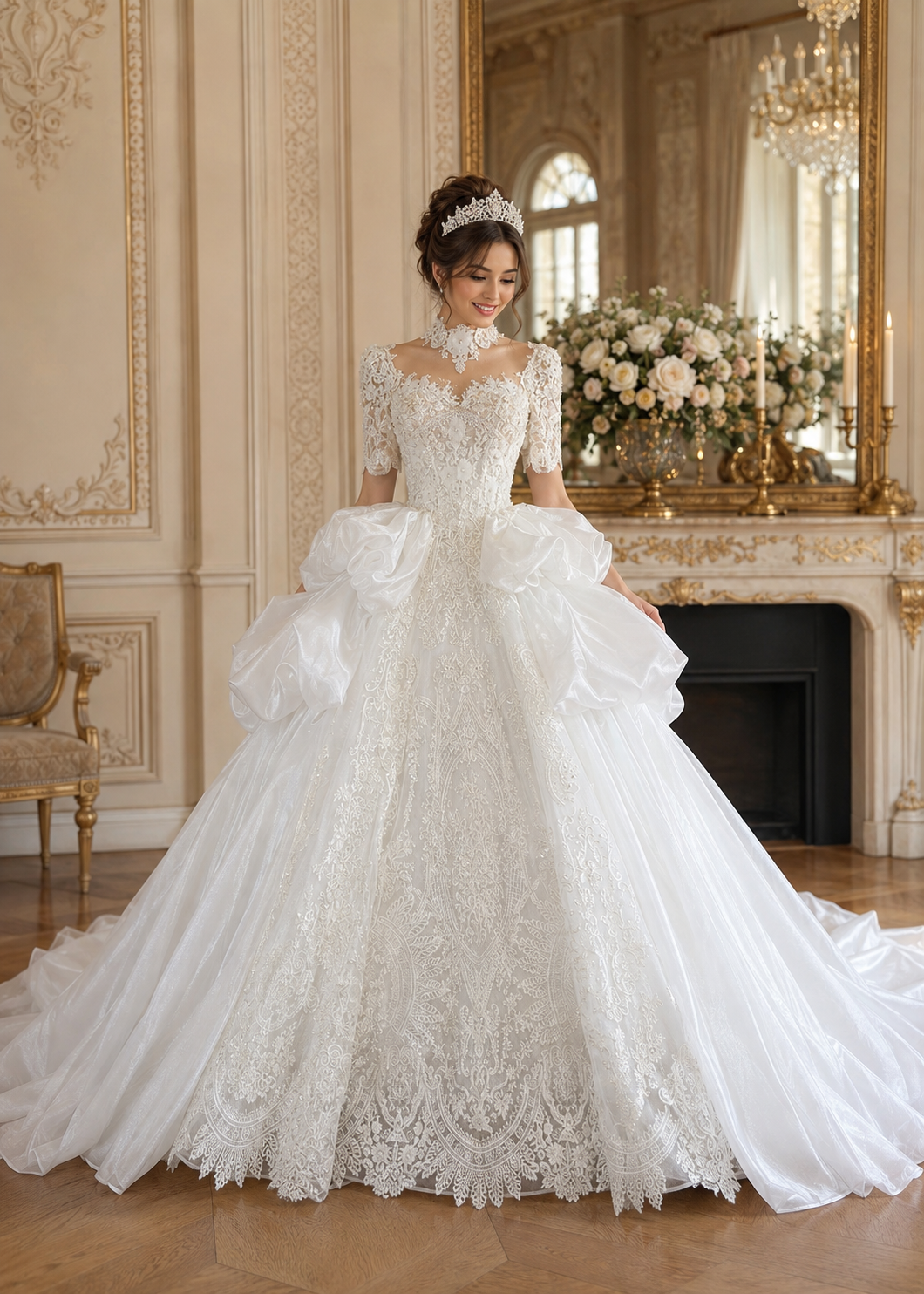
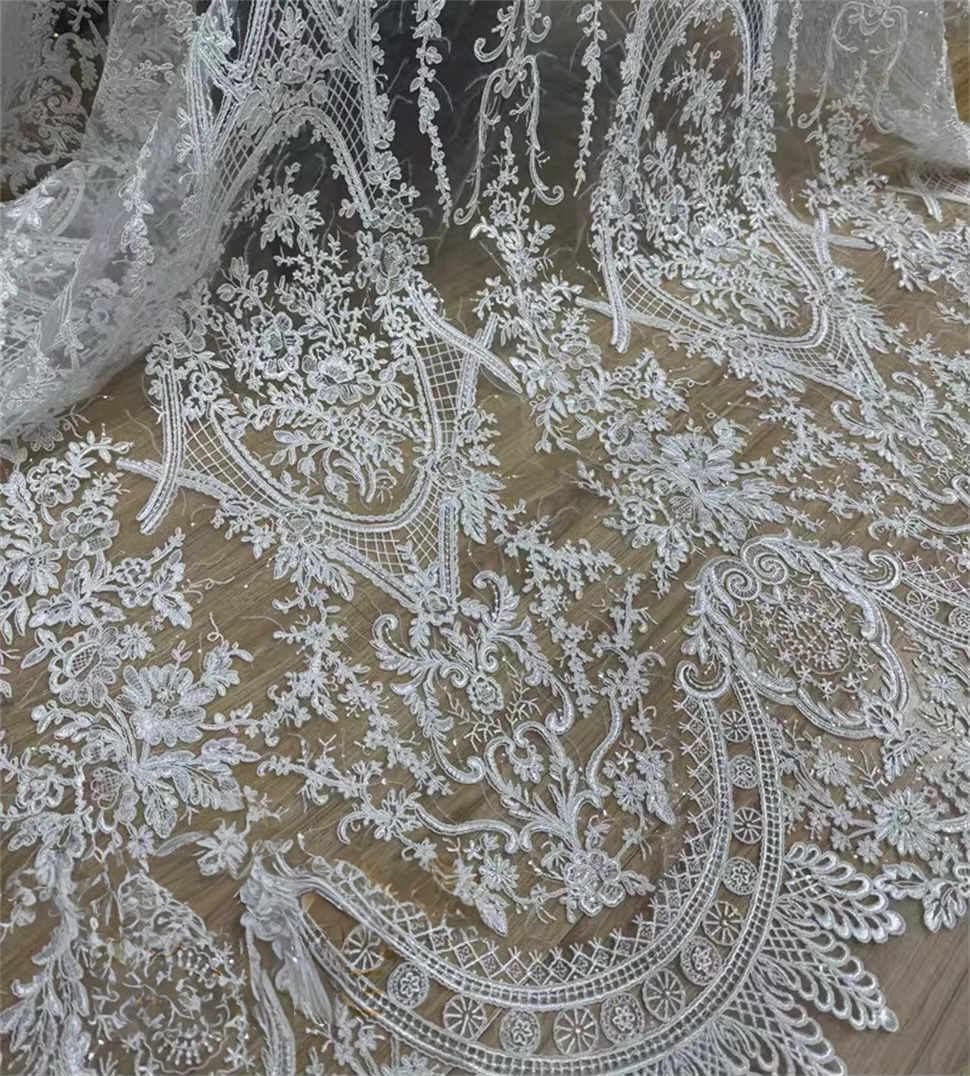
Beaded & Embellished Lace Wedding Dresses
Beaded lace is bridal lace enhanced with hand- or machine-applied embellishments such as pearls, crystals, rhinestones, sequins or glass beads. These details add sparkle, texture and dimension while allowing the underlying lace pattern to remain part of the design.
What Does Beaded Lace Look & Feel Like?
Beaded lace can range from lightly shimmering to heavily embellished and highly dimensional. Fine sequins may create a subtle glow, while pearls, crystals and larger beads produce a richer couture effect.
The amount and type of embellishment also affect the fabric’s weight and movement.
Best Wedding Dress Silhouettes for Beaded Lace
Beaded lace works beautifully for ball gowns, fitted and mermaid wedding dresses, corseted bodices, sleeves, statement trains and luxury bridal separates. It is especially effective when the gown is designed to catch light and create a more glamorous or formal appearance.
What Brides Should Know
Beading adds weight, texture and sparkle, so heavily embellished lace generally feels more substantial than the same lace without embellishment.
Because beads and crystals can also catch on delicate tulle or other fabrics, the placement and construction of the gown matter.
At Bella Luna, beaded lace is selected when a design calls for greater depth, shimmer and couture detail, whether through subtle scattered sequins or elaborate hand-applied pearls and crystals.
- Weight: Light-Medium to Heavy
- Structure: Varies by Base Fabric
- Texture: Embellished and Dimensional
- Pattern Definition: Moderate to High
- Best For: Ball gowns, fitted gowns, corsetry, sleeves and statement trains
- Movement: Varies; heavier embellishment creates more controlled movement
- Why designers use it: Adds sparkle, luxury and dimension while enhancing the underlying lace design
Is beaded lace a separate type of lace? Not necessarily. Beading describes an embellishment applied to an underlying lace, embroidered fabric, tulle or appliqué, so one textile may be both corded and beaded, embroidered and sequined, or appliquéd and pearl-embellished.
3D Floral Lace Wedding Dresses
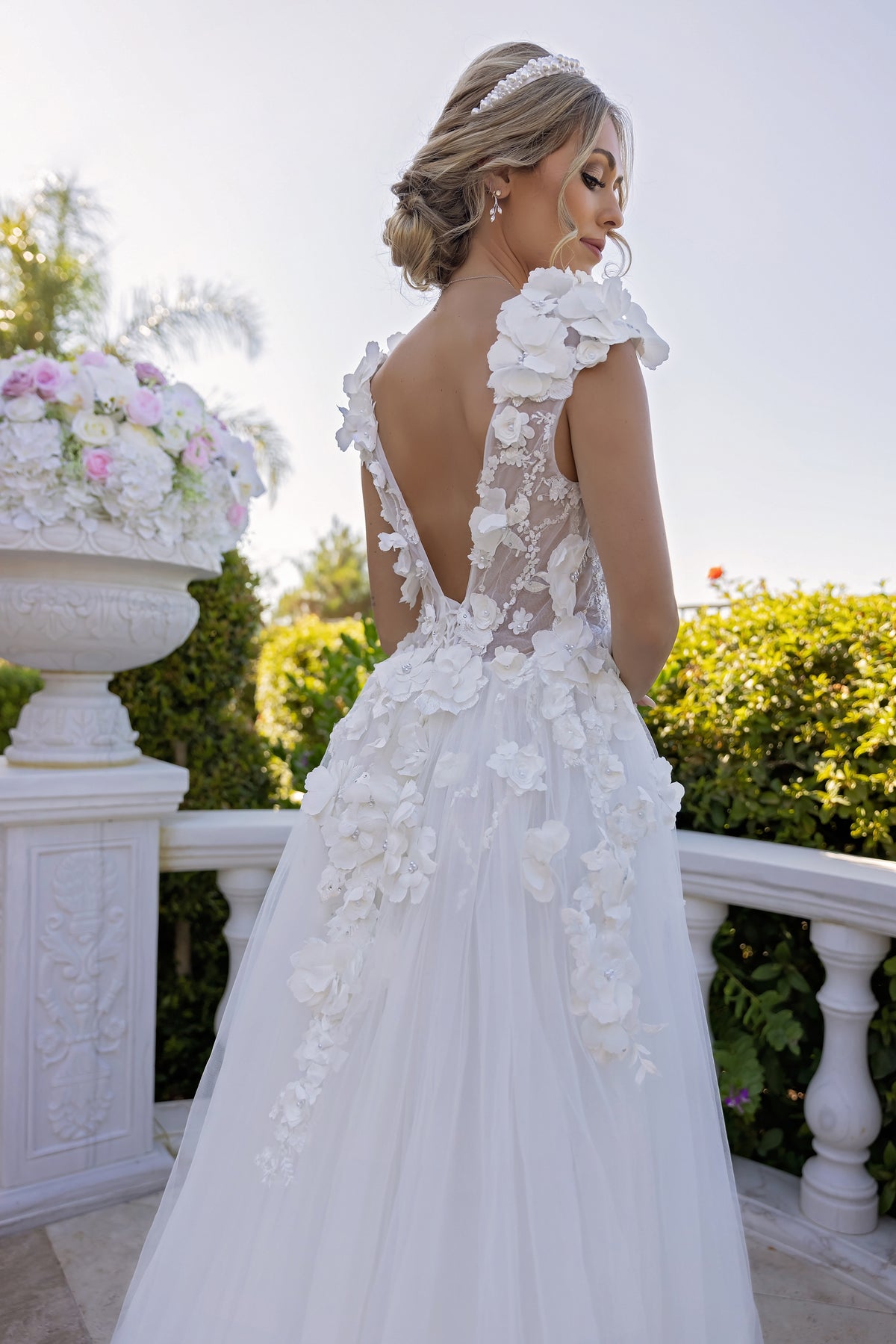
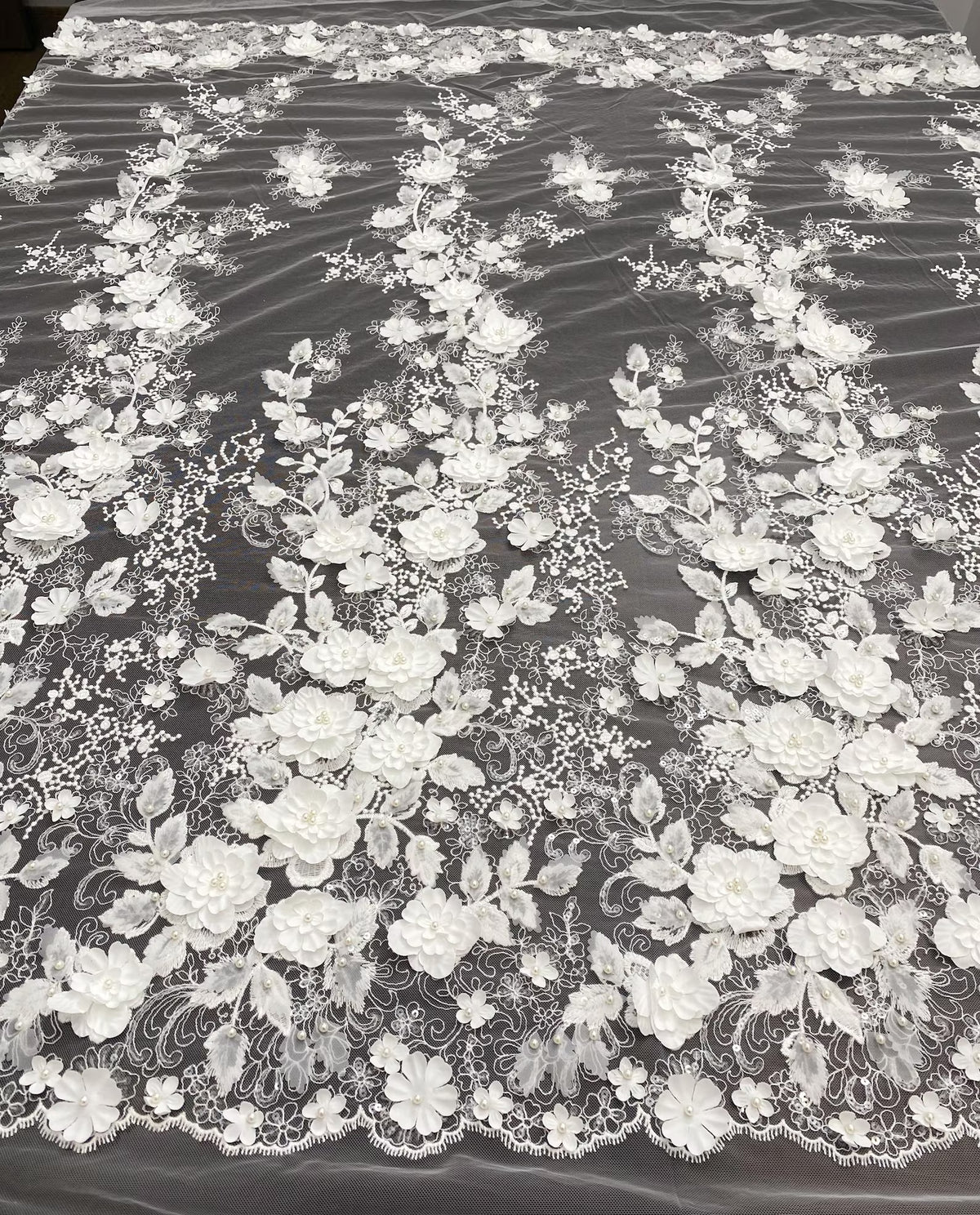
3D floral lace features raised flowers, petals or botanical motifs that extend beyond the surface of the fabric, creating visible dimension and texture. These floral elements may be formed directly within an embroidered textile or individually applied as dimensional appliqués over tulle, lace or another bridal fabric.
What Does 3D Floral Lace Look & Feel Like?
Unlike flat embroidered or traditional lace, 3D floral lace has flowers and petals that physically lift away from the fabric. The effect can range from delicate scattered blossoms to dramatic oversized flowers covering an entire bodice or skirt.
Some designs also incorporate pearls, crystals, sequins or beaded flower centers for additional texture and sparkle.
Best Wedding Dress Silhouettes for 3D Floral Lace
3D floral details work beautifully on ball gowns, romantic A-lines, corseted wedding dresses, fitted gowns, sleeves and statement trains. They are especially effective when the gown is designed to feel botanical, romantic or highly dimensional.
What Brides Should Know
Because dimensional flowers project from the surface of the gown, they create more texture and visual volume than flat lace or embroidery. The size, density and placement of the flowers greatly influence whether the finished gown feels delicate and ethereal or bold and couture.
Larger or heavily embellished flowers may also add weight, so designers often balance dimensional elements with lighter tulle or other sheer bridal fabrics.
At Bella Luna, 3D floral elements are used to create depth, movement and sculptural floral detail, whether scattered delicately across a gown or concentrated along the bodice, skirt or train.
- Weight: Light to Heavy, depending on density
- Structure: Varies by Base Fabric
- Texture: Highly Dimensional
- Pattern Definition: High
- Best For: Ball gowns, A-lines, corsetry, fitted gowns and statement trains
- Movement: Varies according to the base fabric and floral density
- Why designers use it: Creates dramatic floral dimension and a distinctive couture effect
What is the difference between embroidered lace and 3D floral lace? Embroidered lace creates motifs primarily through stitching on a flat foundation, while 3D floral lace incorporates raised petals or flowers that extend away from the surface of the gown.
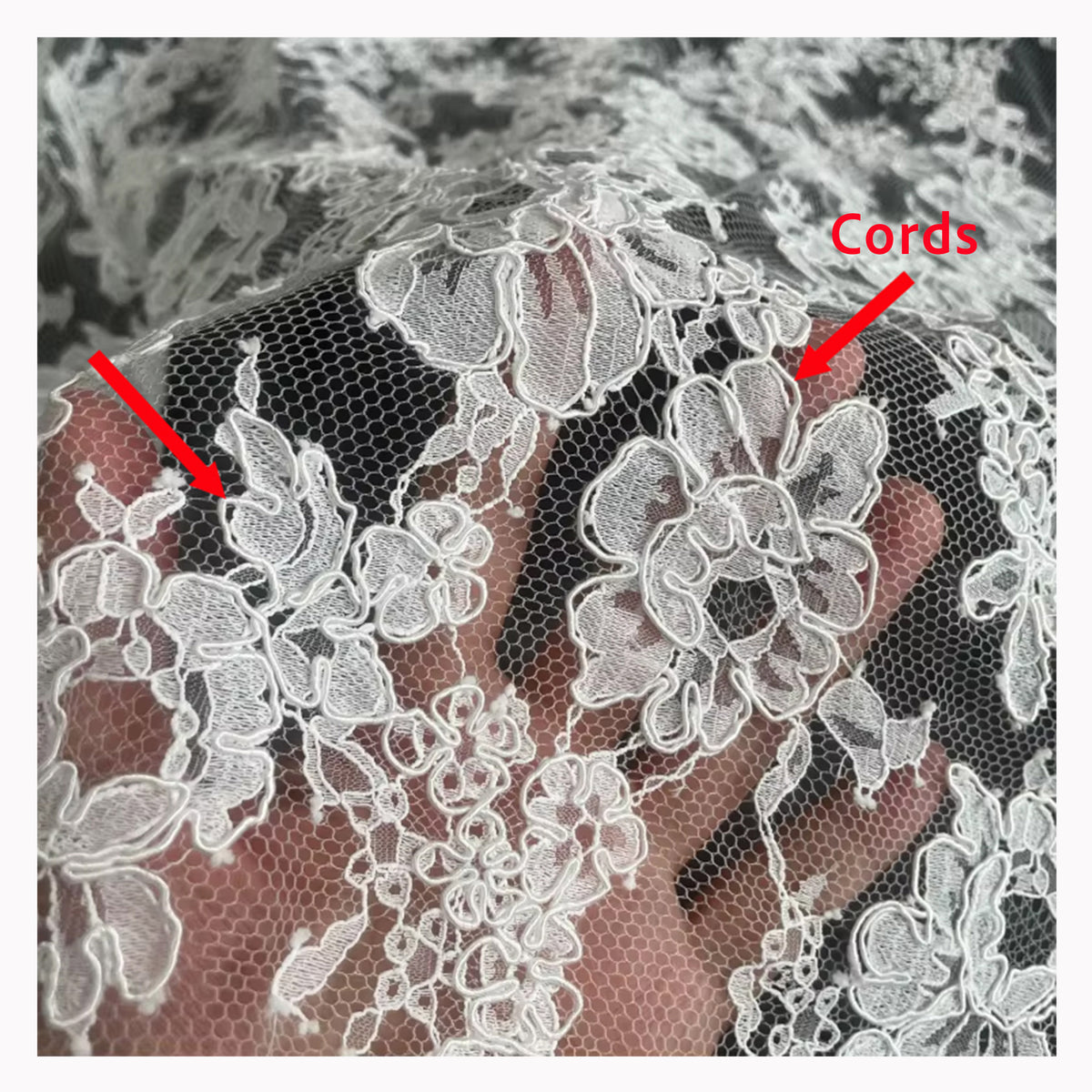
Corded vs. Non-Corded Lace: What’s the Difference?
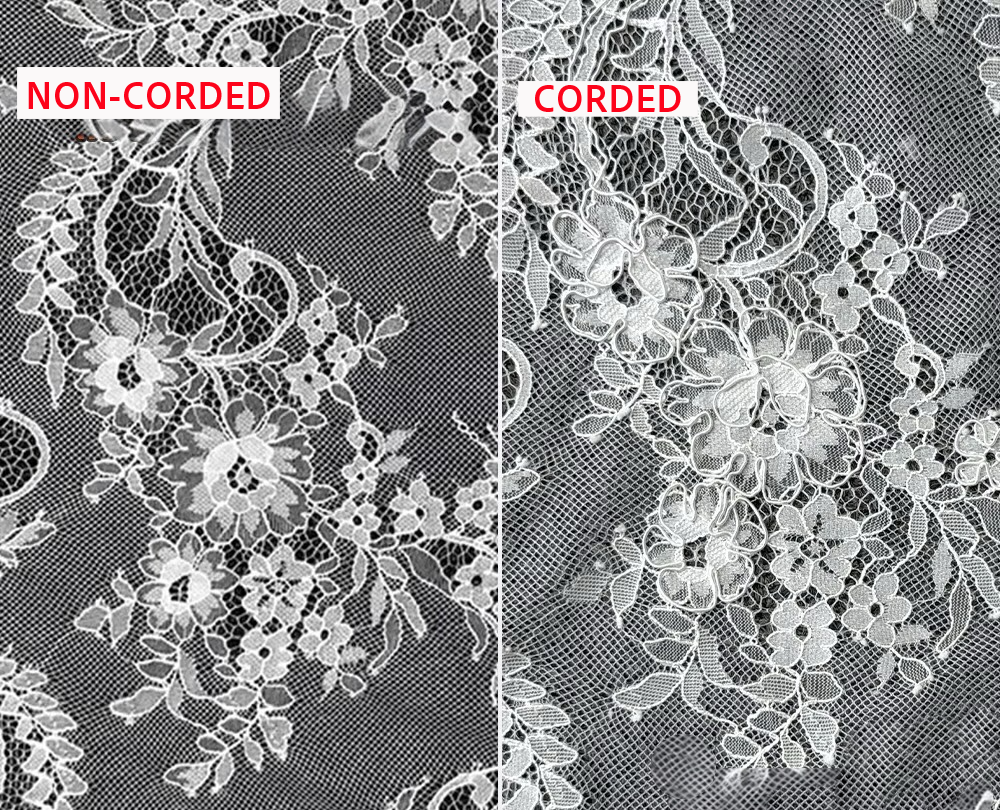
The main difference between corded and non-corded lace is the raised outline around the lace motifs. Corded lace uses thicker threads or cords to trace portions of the pattern, creating greater definition and texture. Non-corded lace has a flatter surface and generally creates a softer, more delicate appearance.
Corded Lace
Corded lace has raised threads outlining flowers, leaves or ornamental motifs. This added definition makes the lace pattern easier to see from a distance and can give a wedding gown a richer, more dimensional appearance.
Surface: Raised and defined
Pattern Visibility: High
Texture: More pronounced
Overall Effect: Rich and dimensional
Best For: Statement lace gowns, fitted silhouettes, corseted bodices and dramatic trains
Non-Corded Lace
Non-corded lace does not have the pronounced raised outlines associated with corded lace. The motifs generally sit flatter against the fabric, creating a softer and often more delicate appearance. Chantilly lace is a well-known example of a delicate non-corded lace style.
Surface: Flatter and softer
Pattern Visibility: Soft to moderate
Texture: More delicate
Overall Effect: Romantic and airy
Best For: Sleeves, veils, illusion details, layering and softer wedding dress designs
Which Is Better for a Wedding Dress?
Neither is inherently better. The right lace depends on the look and construction of the gown.
Choose corded lace when you want stronger pattern definition, visible texture and a more dramatic lace effect. Choose non-corded lace when you want a softer, lighter and more delicate appearance.
At Bella Luna, lace is selected according to the silhouette, structure, lining and overall design of the gown, rather than choosing a textile based on its name alone.
Quick Answer: Corded lace has raised threads outlining portions of the lace pattern, while non-corded lace lies flatter and creates a softer, more delicate effect.
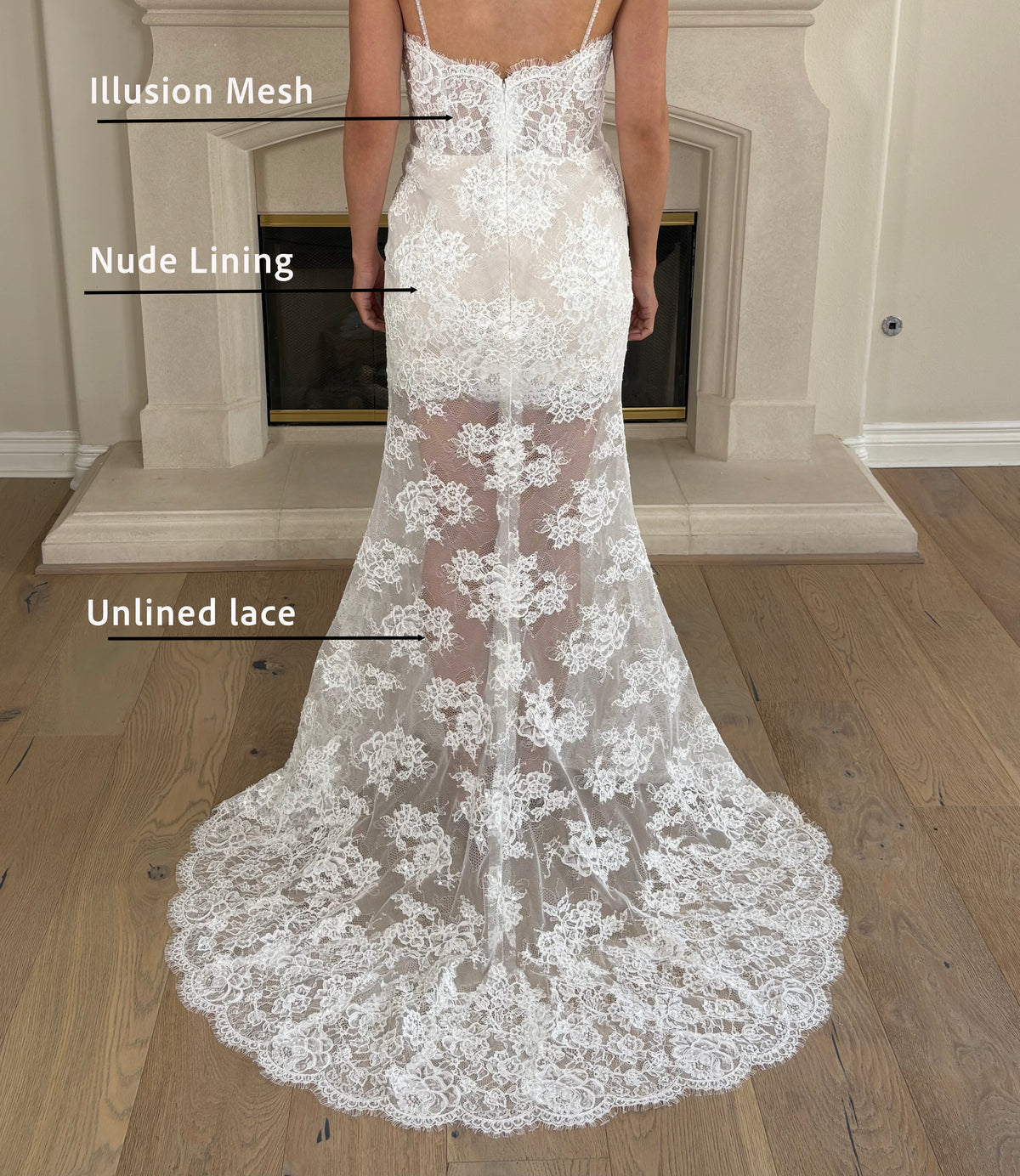
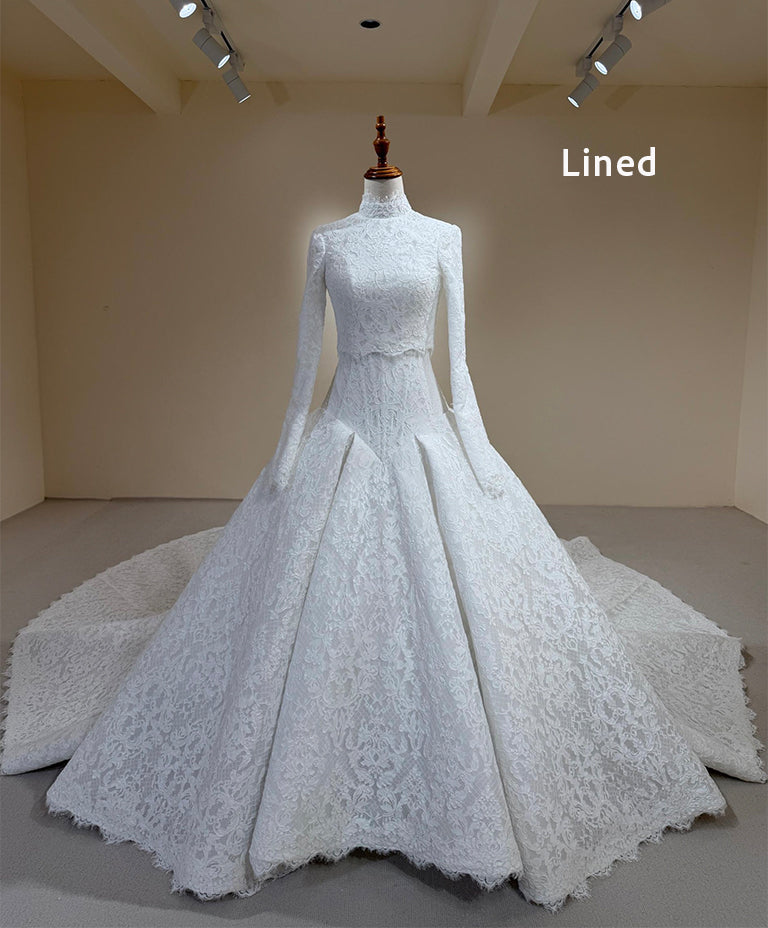
How Lining Changes the Appearance of Lace Wedding Dresses
The lining beneath a lace wedding dress can completely change how the lace pattern, coverage and overall gown appear. Ivory or white lining creates a softer, more traditional bridal look, while nude lining or illusion mesh increases contrast and makes the lace motifs stand out more clearly. Some gowns also combine several lining treatments within one design.
Illusion Mesh
Illusion mesh is a very sheer foundation used beneath lace, embroidery or appliqués to provide support while maintaining the appearance of lace floating against the skin. It is commonly used on corseted bodices, illusion necklines, backs and sleeves.
Because the mesh is intentionally subtle, the lace pattern remains highly visible while the garment still has a foundation for construction.
Nude Lining
Nude or skin-tone lining provides more coverage than illusion mesh while still creating strong contrast behind white or ivory lace. This contrast makes floral motifs and lace patterns appear more defined.
Nude lining is especially popular on fitted wedding dresses, lace skirts and corseted gowns where the lace itself is meant to be a major design feature.
Ivory or White Lining
Ivory or white lining creates a more opaque and traditional bridal appearance. Because the lining and lace are similar in color, the lace pattern blends more softly into the gown instead of standing out dramatically.
This treatment works beautifully for brides who want the texture of lace with greater coverage and a softer overall contrast.
Unlined Lace
Unlined lace has little or no opaque fabric beneath it, allowing the skin or background to remain visible through the open areas of the lace.
This creates the highest level of transparency and lace definition and is often used on sections of skirts, trains, sleeves or illusion details rather than throughout an entire gown.
Can One Wedding Dress Use Different Types of Lining?
Yes. A wedding dress may combine illusion mesh, nude lining, ivory lining and unlined lace within the same gown. For example, a bodice may use illusion mesh, the upper skirt may be lined for coverage, and the lower skirt or train may remain unlined to showcase the lace pattern.
At Bella Luna, lining is selected as part of the overall gown design because the color, opacity and placement of the lining can dramatically change how the exact same lace appears.
Quick Answer: Ivory or white lining creates a softer, more opaque lace effect; nude lining increases contrast; illusion mesh creates a sheer, floating-lace appearance; and unlined lace provides the greatest transparency and pattern definition.
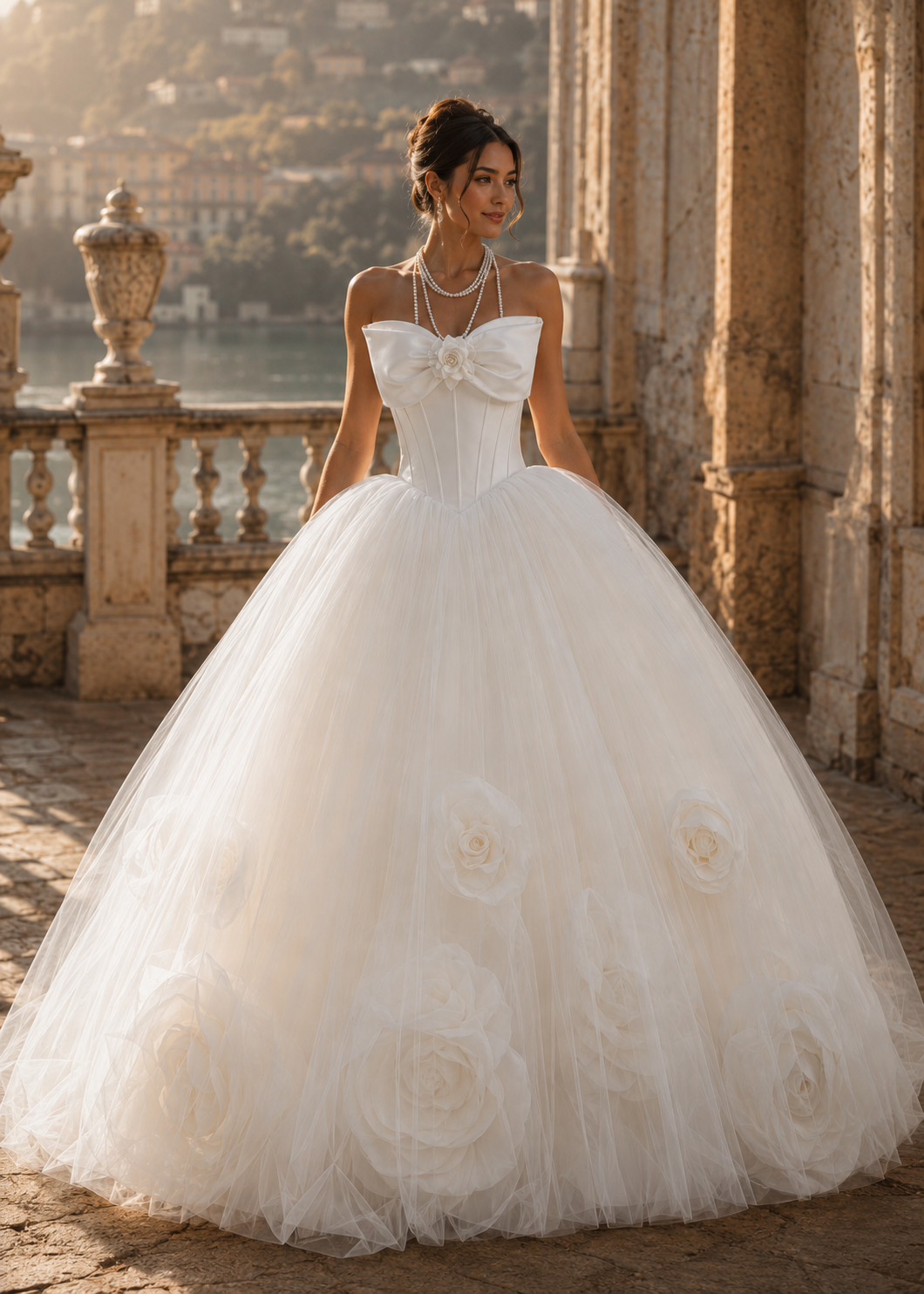
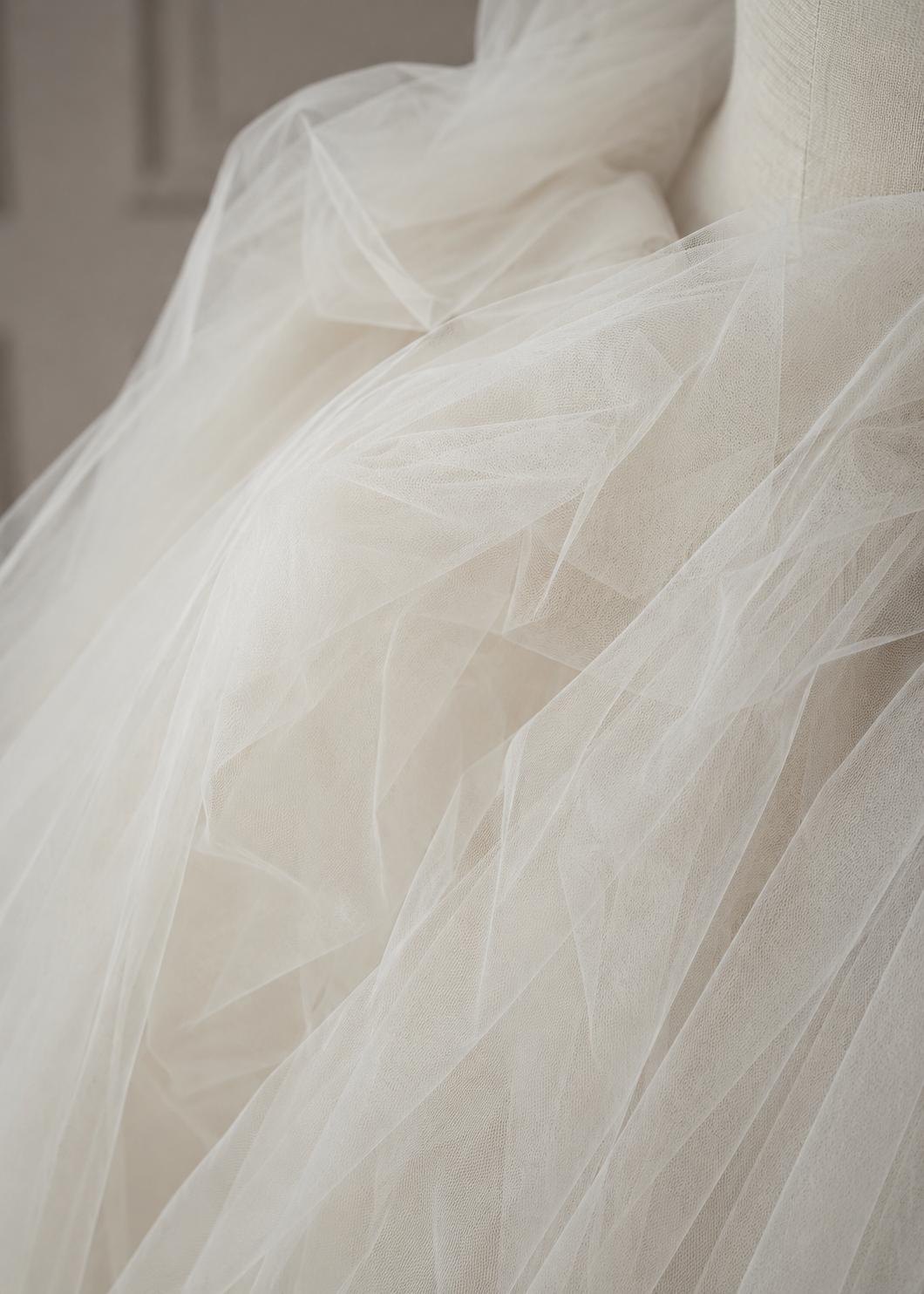
Tulle Wedding Dress Fabric
Tulle is a lightweight, sheer net fabric used throughout bridal design to create volume, layering and airy movement. It can be soft and flowing or slightly firmer depending on the type, making it one of the most versatile fabrics used in wedding dresses.
What Does Tulle Look & Feel Like?
Tulle has an open, net-like construction and is usually very lightweight. Fine bridal tulle can feel soft and almost weightless, while firmer varieties provide more structure and help support fuller skirts.
Several layers can be combined to create volume without the heaviness of a dense woven fabric.
Best Wedding Dress Silhouettes for Tulle
Tulle works especially well for ball gowns, romantic A-lines, layered skirts, illusion bodices, sleeves and dramatic trains. It is also frequently used beneath lace, embroidery and appliqués as a sheer foundation.
What Brides Should Know
Tulle can look very different depending on its softness, number of layers, color and what is placed over or beneath it. A single sheer layer creates transparency, while multiple layers produce greater coverage and volume.
Tulle may also be embellished with glitter, sequins, embroidery, lace appliqués or 3D flowers, making it an important foundation for many couture bridal designs.
At Bella Luna, tulle is used both visibly and structurally—from soft layered skirts and illusion details to foundations beneath embroidered lace, appliqués and dimensional embellishment.
- Weight: Very Light to Light
- Structure: Low to Medium
- Drape: Soft to Airy
- Sheen: Matte unless embellished
- Best For: Ball gowns, A-lines, layered skirts, illusion details and embellished gowns
- Movement: Light and Airy
- Why designers use it: Creates volume and transparency without excessive weight
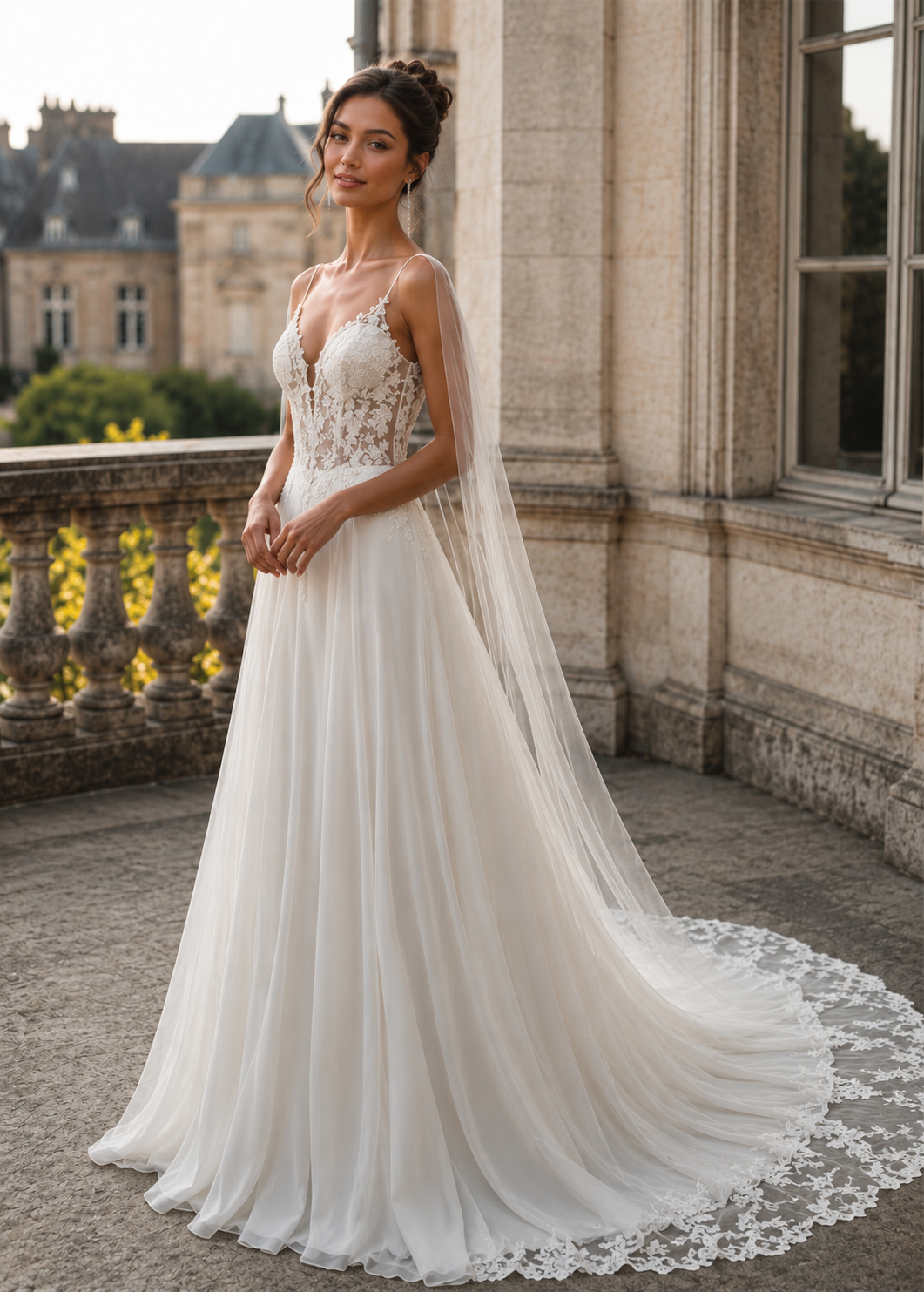
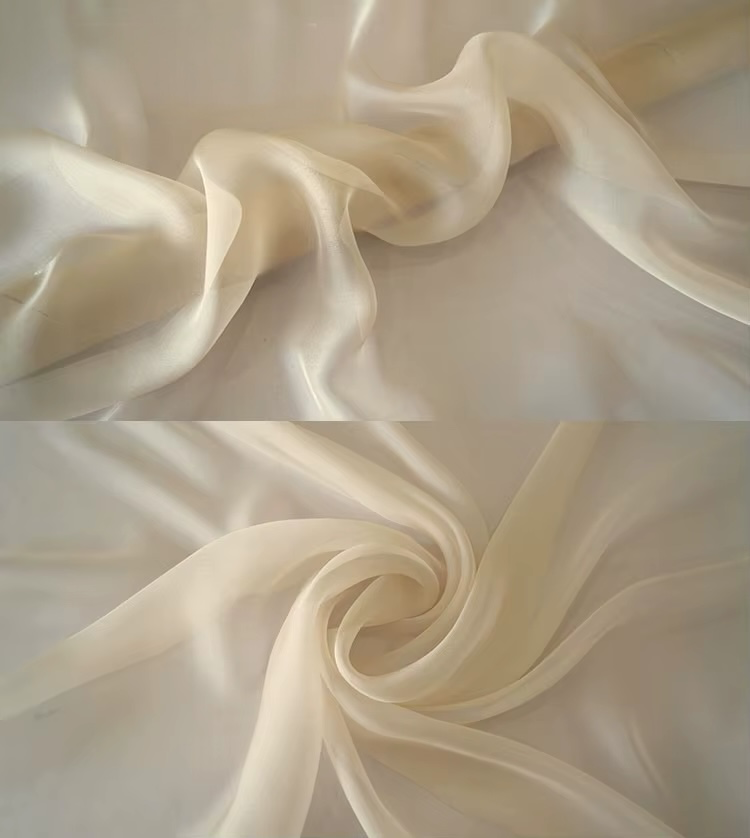
Chiffon Wedding Dresses
Chiffon is a lightweight, sheer bridal fabric known for its soft drape, airy movement and delicate, flowing appearance. Unlike tulle, which has a visible net structure and can build volume through layering, chiffon falls more fluidly and creates a softer, more relaxed silhouette.
What Does Chiffon Look & Feel Like?
Chiffon has a fine, slightly textured surface with very little structure. It feels light and soft and moves easily with the body, making it especially beautiful when the design includes draping, gathering or flowing skirt layers.
Because chiffon is naturally sheer, it is typically used over a lining or layered with other fabrics.
Best Wedding Dress Silhouettes for Chiffon
Chiffon works especially well for soft A-line gowns, sheath and column dresses, flowing skirts, draped bodices, cape details and lightweight sleeves.
It is ideal for bridal designs intended to feel romantic, effortless and fluid rather than highly structured or sculptural.
What Brides Should Know
Chiffon is one of the lightest and most fluid bridal fabrics, which makes it comfortable and graceful for movement. However, it does not create the dramatic volume or crisp shape of fabrics such as Mikado, Duchess satin or organza.
Its soft drape also means that the lining and internal construction of the gown are especially important, since chiffon itself provides very little support.
At Bella Luna, chiffon is best suited to designs where the goal is softness, movement and an airy bridal silhouette rather than architectural structure.
- Weight: Very Light to Light
- Structure: Low
- Drape: Very Soft and Fluid
- Sheen: Matte to Subtle
- Transparency: Sheer
- Best For: Flowing A-lines, sheath gowns, draped skirts, sleeves and cape details
- Movement: Soft, airy and flowing
- Why designers use it: Creates graceful movement without adding visual weight
What is the difference between chiffon and tulle?
Chiffon is a soft woven fabric that drapes and flows, while tulle is a fine net fabric that can be layered to create transparency, softness or volume.
What About Organza?
Organza is a lightweight, sheer bridal fabric with more crispness and structure than chiffon. While chiffon falls softly and fluidly, organza has a firmer hand that allows it to hold shape, create volume and support more sculptural gown construction.
At Bella Luna, we most often use organza as a supporting layer beneath lace, embroidered textiles or lace appliqués, particularly in highly embellished wedding gowns where the design needs lightness without losing structure. Because organza is translucent yet more substantial than tulle or chiffon, it can help support decorative elements while still maintaining an airy appearance.
- Weight: Light
- Structure: Medium
- Drape: Crisp and controlled
- Sheen: Subtle to softly luminous
- Best For: Layered skirts, structured overlays, embellished gowns and supporting lace or appliqué
- Movement: Light, but more sculptural than chiffon
- Why designers use it: Adds airy structure and supports embellishment without the heaviness of a dense fabric
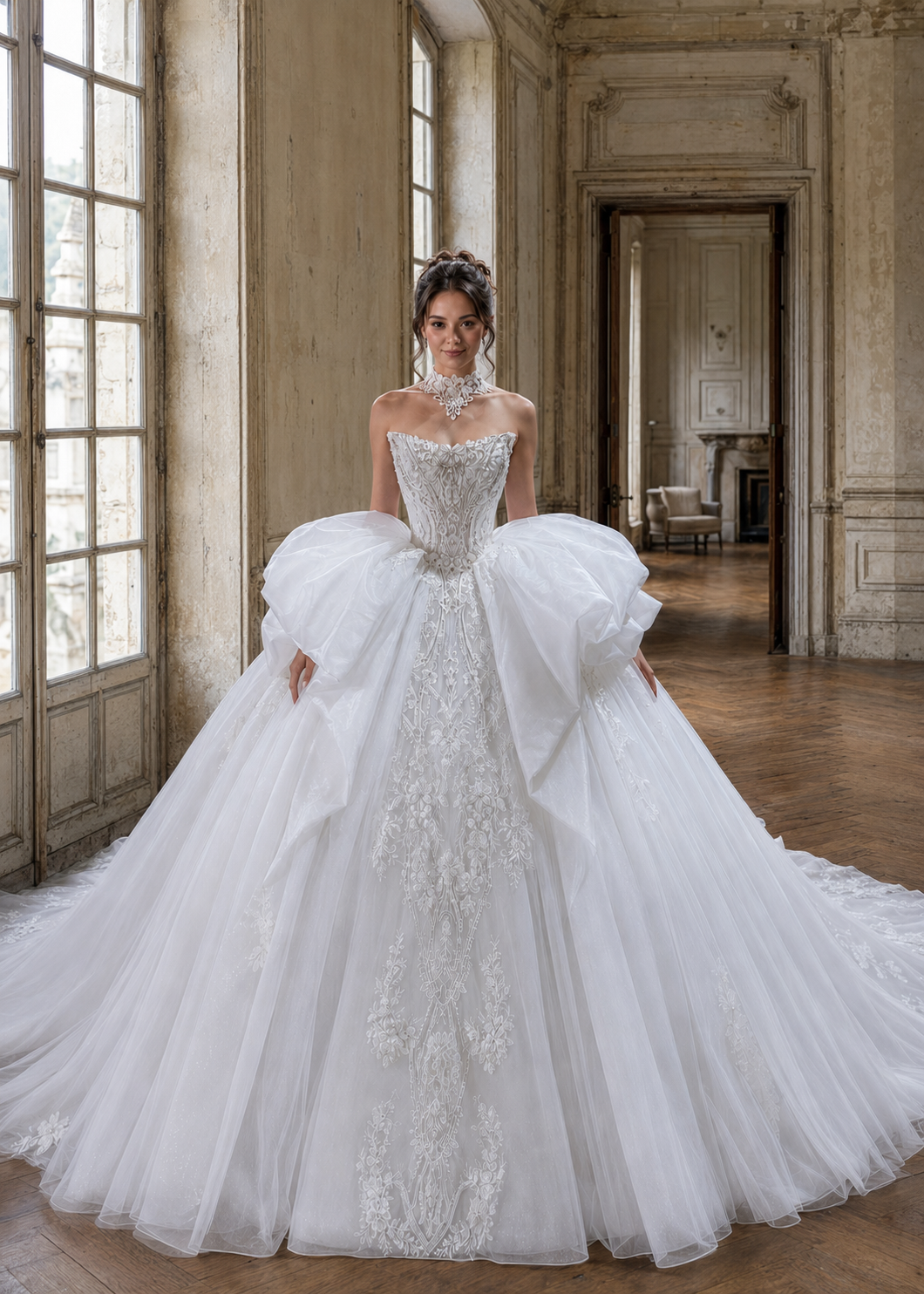
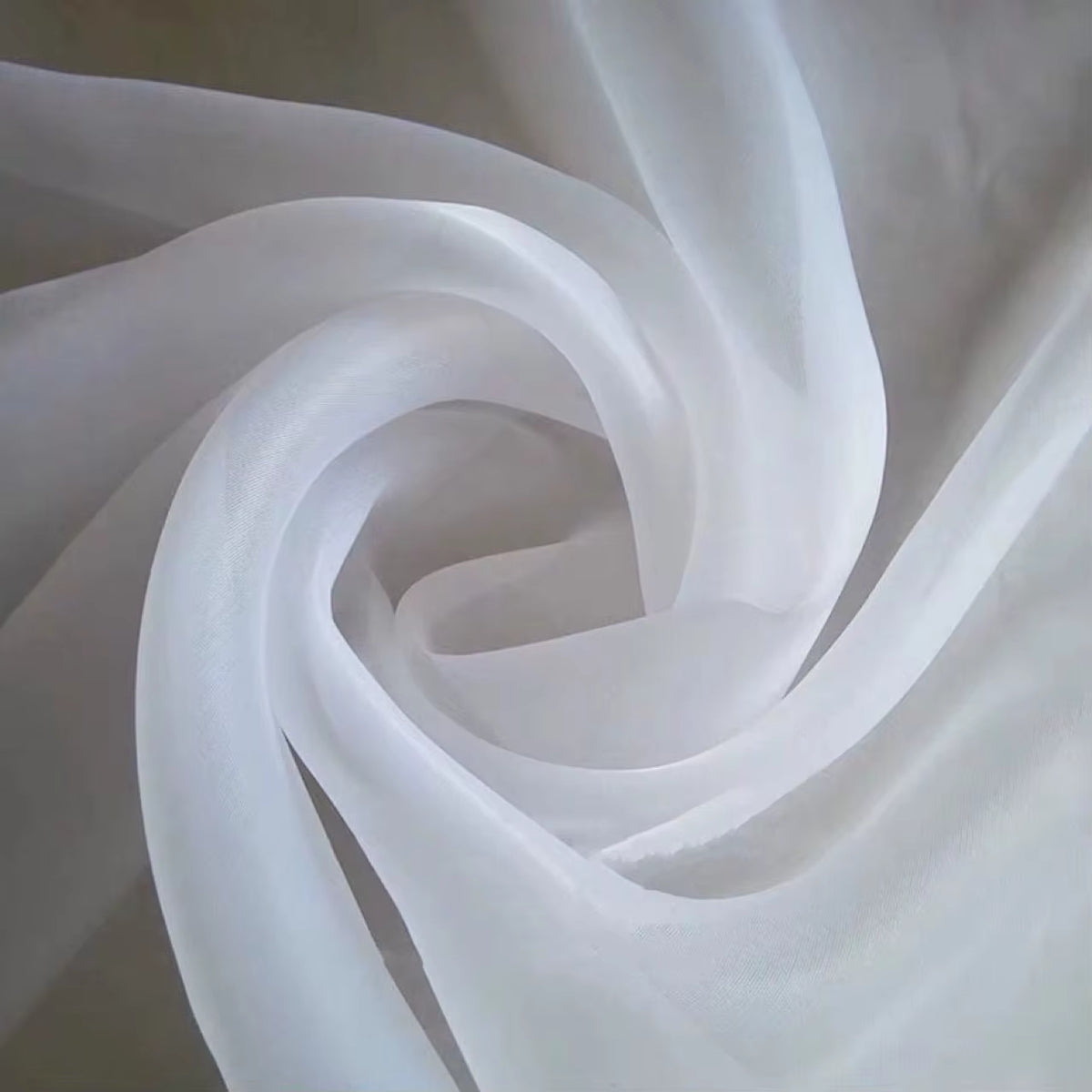
Organza Wedding Dress Fabric
Organza is a lightweight, sheer bridal fabric with a crisp hand and more structure than chiffon. It can create airy volume, sculptural folds and layered fullness without the heaviness of denser fabrics such as Mikado or Duchess satin.
What Does Organza Look & Feel Like?
Organza is sheer, smooth and slightly crisp, with enough body to hold shape rather than falling closely against the body. It often has a subtle luminous finish and can appear delicate while still providing structure.
Best Wedding Dress Silhouettes for Organza
Organza works beautifully for ball gowns, structured A-lines, layered skirts, overskirts and sculptural bridal details. It is also useful beneath lace, embroidery and appliqués when the gown needs a lightweight foundation with more support than chiffon or soft tulle.
What Brides Should Know
Organza is lighter than many structured bridal fabrics but has noticeably more body than chiffon. Because it holds shape well, it can create volume without requiring extremely heavy layers.
At Bella Luna, organza is often used beneath embellished lace, embroidered textiles and lace appliqués, particularly when a couture gown needs structure and support while maintaining an airy appearance.
- Weight: Light
- Structure: Medium
- Drape: Crisp and Controlled
- Sheen: Subtle to Luminous
- Best For: Ball gowns, A-lines, layered skirts, overlays and embellished gowns
- Movement: Light but Structured
- Why designers use it: Creates volume and supports embellishment without excessive weight
What is the difference between organza and chiffon? Chiffon is softer and more fluid, while organza is crisper and better able to hold shape and volume.
Wedding Dress Fabric FAQs
There is no single best wedding dress fabric. The right choice depends on the silhouette, level of structure, movement, texture and overall look you want. Mikado and Duchess satin are excellent for structured gowns, softer satin and chiffon create more fluid movement, while lace, tulle and dimensional embellishments add texture and romance.
Satin is a broad fabric category known for its smooth surface and sheen, while Mikado is typically firmer and more structured. Mikado is often chosen for sculpted ball gowns, basque waists and architectural silhouettes, while softer satins are better suited to draped or body-skimming designs.
It can. Smooth fabrics reveal more of the gown’s construction and may show body contours or undergarment lines more easily than textured fabrics such as lace. Fabric weight, lining and internal construction all affect how smooth the finished gown appears.
Structured fabrics such as Mikado and Duchess satin are excellent for ball gowns because they hold volume and shape well. Tulle can also create a fuller, softer ball-gown effect, while lace and appliqués can be layered over these fabrics for additional texture.
Fitted gowns can be made from several fabrics depending on the desired look. Crepe and fluid satin create a sleek finish, while lace and embroidered textiles add texture and help soften the appearance of body contours. The construction and lining are just as important as the outer fabric.
Embroidered lace has motifs stitched directly onto a fabric or mesh foundation. Lace appliqués are individual motifs that are cut from lace or embroidered fabric and then strategically placed onto another fabric such as tulle, organza or satin.
Chantilly is a very lightweight, delicate lace known for its fine mesh and soft floral pattern. It is much lighter than Guipure or heavily corded lace and is often used in layers, sleeves, veils or beneath other bridal fabrics rather than as the primary structural fabric of a gown.
Tulle is a sheer net-like fabric often used to create volume and layered skirts. Chiffon is softer and more fluid, creating light, flowing movement. Organza is also sheer but noticeably crisper, giving it more structure and making it useful for shaped layers and embellished gowns.
Yes. Lining can dramatically change how lace appears. Nude or skin-tone lining increases contrast and makes lace motifs stand out, while ivory or white lining creates a softer, more blended effect. Sheer mesh can provide coverage while preserving an illusion look.
Yes. Lace gowns can be fully lined, partially lined or constructed with sheer mesh depending on the desired coverage. The choice of lining affects not only modesty but also the contrast, depth and visibility of the lace pattern.
Wrinkling varies by fiber, fabric construction and weight, so no bridal fabric is completely wrinkle-proof. Structured Mikado and heavier satins generally hold their shape well, while very lightweight or fluid fabrics may show creasing more readily.
For a custom gown, you do not need to choose the textile alone. The fabric should be selected according to the gown’s silhouette, structure, drape, embellishment and movement. At Bella Luna, the design team selects the fabric or combination of fabrics that will best achieve the intended look and construction of the gown.
The best fabric depends on the silhouette, structure, movement and overall look of the design. A soft fitted gown may require a fluid satin or chiffon, while a sculptural ball gown, corseted silhouette or dramatic overskirt may need a more structured fabric such as Duchess satin, Mikado or organza.
For a custom gown, the fabric should follow the design—not the other way around. At Bella Luna Gowns, the textile or combination of textiles is selected according to the shape, drape, support, embellishment and finish the final gown requires.